I work Industrial Maintenance, my tools have to work and last, I think Knipex does that!
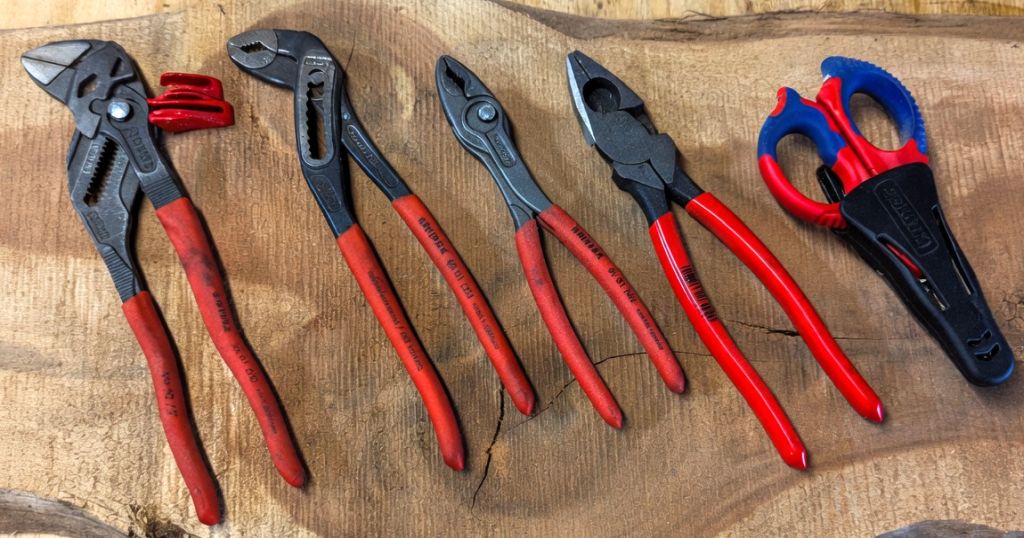
1. Knipex Pliers Wrench (86 01 250) (The 10-inch)
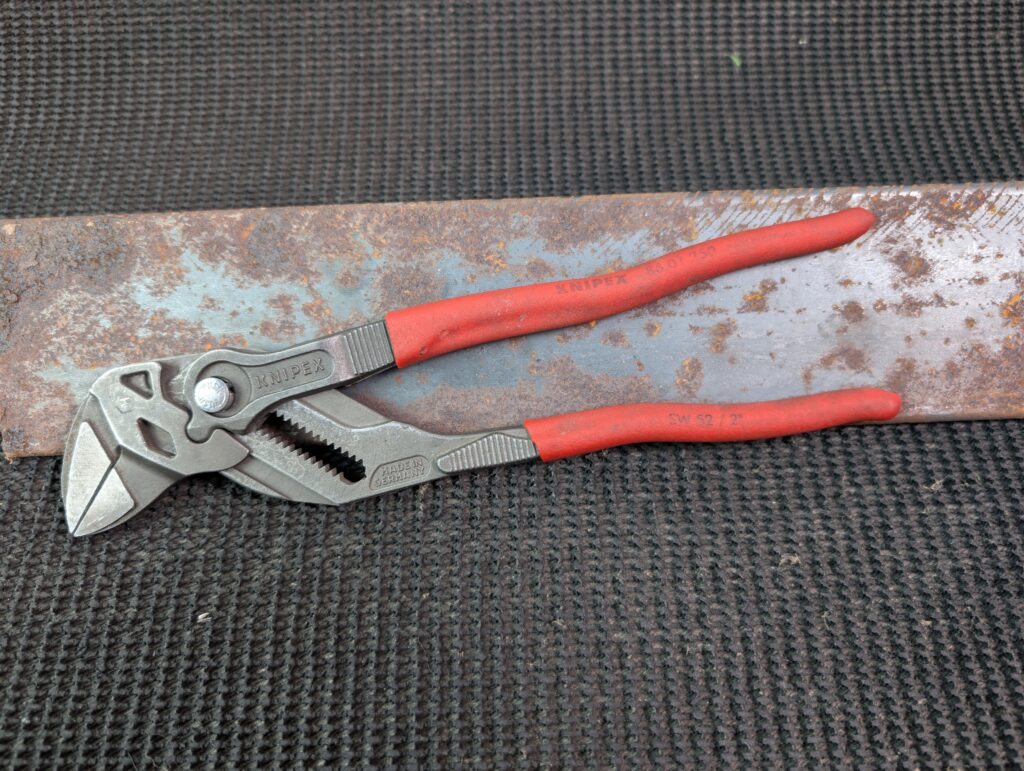
The Mechanic’s Take: The Pliers Wrench is the ultimate hybrid. It works like a pair of pliers but grips like a precision wrench. Once you set the opening with the push-button, it locks onto the fastener. The best part? It actually acts like a ratchet—you just slightly open the jaw, rotate, and move to the next flat side of the nut. It’s faster, tighter, and more reliable than a standard adjustable wrench.
✅ Pros
- Superior Leverage : The cam-action design means the harder you squeeze, the tighter it grips the fastener.
- Massive Jaw Capacity : The 10-inch model actually has a wider jaw opening than a standard 12-inch adjustable wrench.
❌ Cons
- Learning Curve : It’s not as ‘idiot-proof’ as a Crescent wrench; it takes a few tries to master the ratcheting action.
- Professional Price Tag : These aren’t cheap. For a casual DIYer, the cost might be hard to swallow, but for the trade, they pay for themselves.
2. Knipex Alligator Pliers (88 01 250) (The 10-inch)
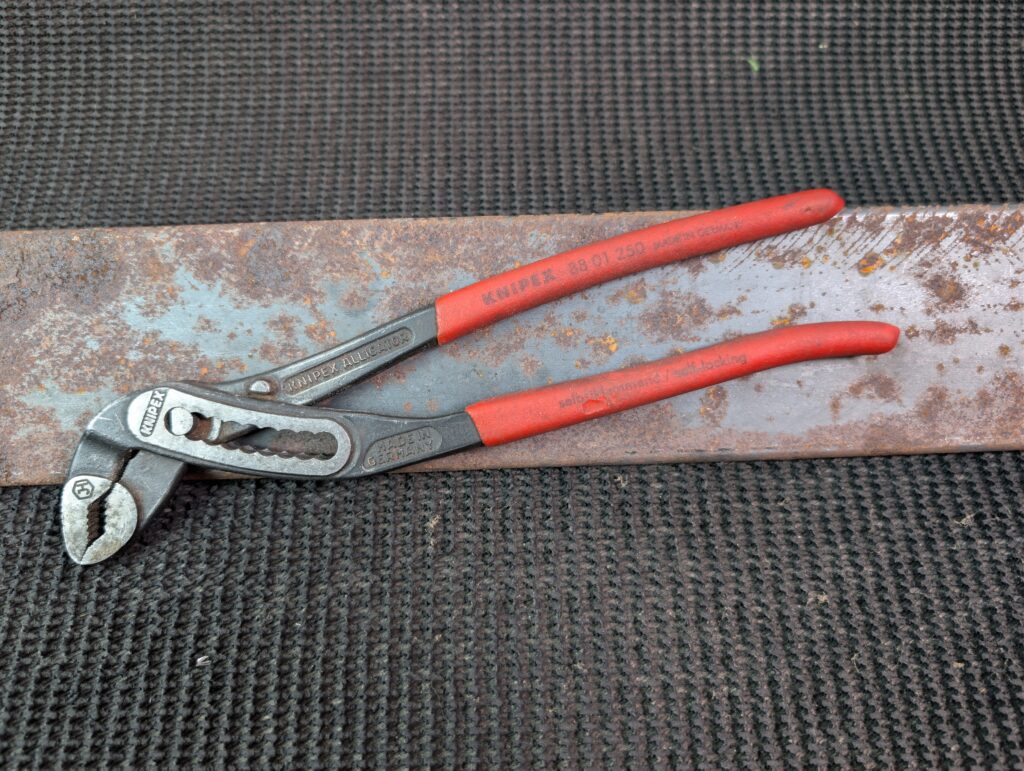
The Mechanic’s Take: The Alligator pliers are a masterclass in superior engineering. Unlike the standard ‘Channel Lock’ style with a rivet that eventually wobbles, the Knipex box-joint hinge keeps tool play to a bare minimum. The jaw design is aggressive—it bites and stays put. And let’s be real: even though we’re taught not to use pliers on nuts and bolts, the offset jaw design on these handles them better than anything else in the bag when you’re in a pinch.
Side Note: This was my first set of Knipex Pliers I bought, Over 5 Years of hard Industrial Maintenance work and they are usually the first tool out of my bag, and Still going Strong!
✅ Pros
- Pinnacle for Plumbing: For pipe work, these are the gold standard, but the sharp, hardened teeth make them useful for almost any gripping task.
- Built to Last: The materials and engineering mean the teeth stay sharp and grippy long after cheaper brands have rounded off.
❌ Cons
- Hard to Fault: It’s honestly difficult to find a downside to these pliers. They just work.
- Price Point: While they aren’t much more than “premium” competitors, they are still an investment compared to big-box store specials.
3. Knipex TwinGrip Slip Joint Pliers (82 01 250)
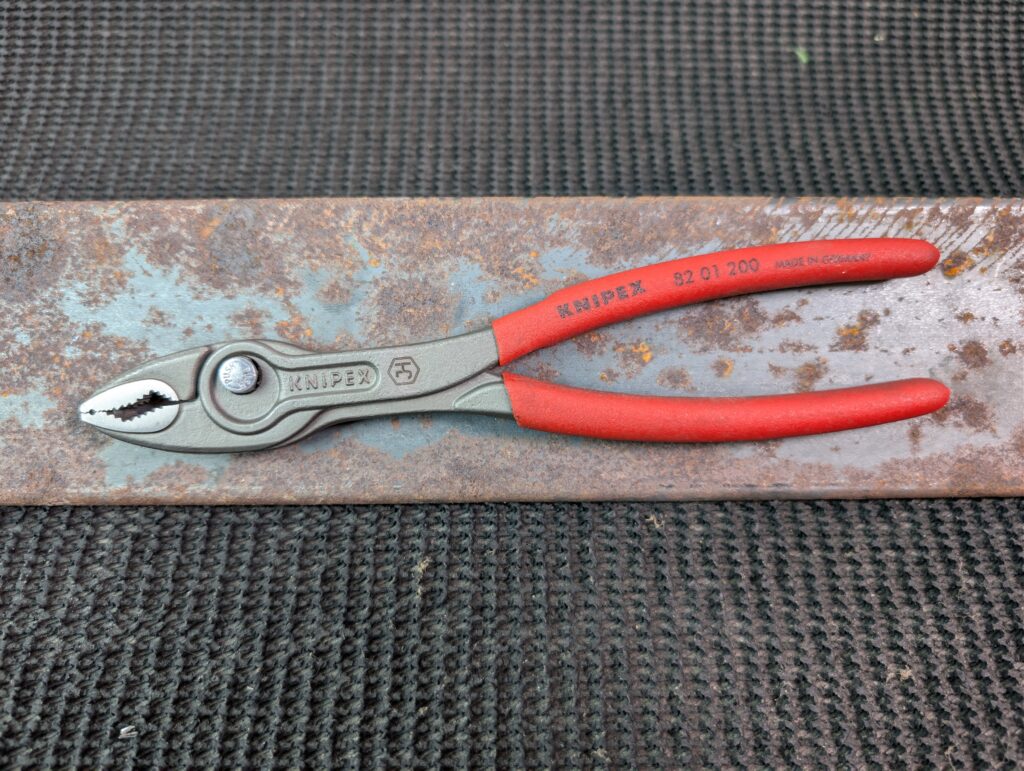
The Mechanic’s Take: The TwinGrip is a versatile workhorse with one specific ‘get out of jail free’ card: the front-grip jaw design. It’s got that aggressive tooth pattern on the nose—similar to a Vamplier—that is purpose-built for grabbing and turning broken bolts or stripped screws. As a mechanic, I spend a lot of time extracting stubborn hardware, and having this feature integrated into a standard slip-joint design with an adjustable, locking jaw makes it an essential bailout tool.
✅ Pros
- Extraction Specialist: The front-on grip is a lifesaver for broken hardware that a side-biting plier just can’t grab.
- Adjustable & Locking: Unlike basic slip-joints, you get the adjustable jaw width and the rock-solid lock Knipex is known for.
❌ Cons
- Specialized Jaw: The extra teeth on the tip are great for bolts, but they can actually get in the way of some standard plier operations.
- Shape Sensitive: While it’s the king of flat and round stock, it can be ‘hit or miss’ on more irregular industrial shapes.
4. Knipex Lineman’s Pliers (09 01 240)
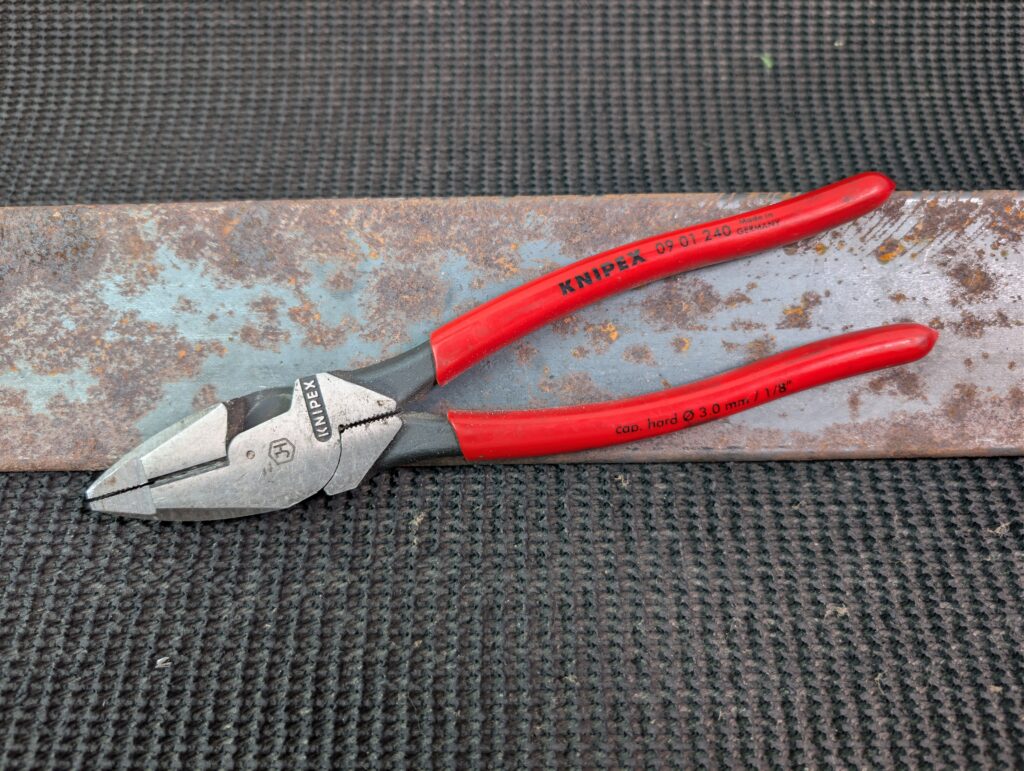
The Mechanic’s Take: In the industrial maintenance world, these are the ultimate workhorses. While the ‘Klein-only’ crowd might disagree, as a mechanic, I find the Knipex engineering simply unbeatable. This specific 10-inch model features a high-leverage design and a built-in fish tape puller. They have that perfect ‘heft’ to them—let’s be honest, we all use these as a hammer more than we should, and these can take the abuse. After two years of cutting steel wire and heavy cable, the cutting edges are still as sharp as day one.
✅ Pros
- Industrial Durability: Solid build with enough weight to handle heavy-duty striking and twisting without loosening up.
- Superior Edge Retention: High-leverage jaws and induction-hardened edges that stay sharp even after years of cutting steel wire.
❌ Cons
- “The Twisting Grip”: Some pros find the jaw tip isn’t as wide as a Klein, making it a bit trickier to get that perfect “J-hook” or wide twist on heavy-gauge wire.
- Lighter Head Weight: Because they are slightly more balanced (lighter head), they don’t have quite the same “swing” force as a head-heavy Klein if you’re actually using them as a hammer.
5. Knipex Electrician’s Shears (95 05 155)
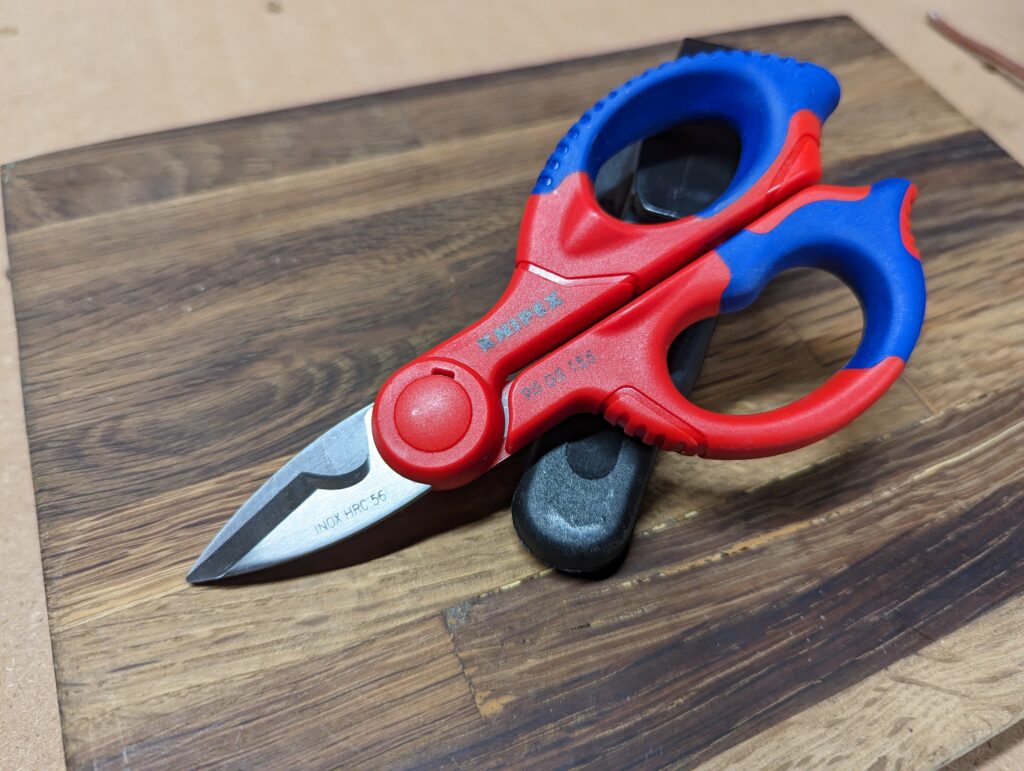
The Mechanic’s Take: Don’t let the size fool you—this ‘little gem’ is one of the most versatile carry tools in my shop. While they’re built for electrical work, I use them for everything from precision-cutting custom gaskets to sniping poly-banding material that would dull a razor knife in seconds. Their compact profile is a lifesaver when you’re reaching into a packed control cabinet; you can get the job done without knocking wires loose or shorting out adjacent components. They come with a handy scabbard that clips right to your belt or the side of your tool bag
✅ Pros
- Precision Power: Razor-sharp blades that offer incredible control for fine tasks like stripping thin-gauge wire or trimming gaskets.
- Pocket-Friendly Portability: Extremely lightweight and small enough to live on your person at all times without being bulky.
❌ Cons
- Ergonomic Limit: If you have ‘bear paws,’ the grips can feel a bit cramped. There’s enough room to be controllable, but it’s a tight fit for large hands.
- Short Stroke: The cutting area is relatively short because a portion of the blade is dedicated to the wire-stripping notch. Not ideal for long, continuous cuts.
Summary:
Whether you’re an industrial mechanic like me or a pro electrician, these five tools represent the best of German engineering. They aren’t the cheapest on the rack, but they’re the ones you only buy once.”