
Look, I’ve bought the cheap stuff and I’ve bought the good stuff. Honestly, the math isn’t always obvious when you’re standing in the tool aisle looking at a price tag. But the job site has a way of teaching you which one you should have picked once things actually go sideways (and they always do). I’m not here to sell you on some brand-name lifestyle; I buy most of my own tools and I’m definitely not being paid by these companies to tell you what to do. My opinions are mine, for better or worse. What we’re talking about today is the “Buy Once, Cry Once” philosophy. It sounds like a way to justify spending too much money, but in industrial maintenance, it’s actually just basic math. We’re looking at Total Cost of Ownership—not just what you pay today, but what happens when that tool fails mid-shift while the plant is down and the boss is breathing down your neck.
Disclosure: I buy most of my own tools, and sometimes companies send me items to test. Nobody has ever paid me for an opinion. As an Amazon Associate I earn from qualifying purchases.
Key Takeaways: Buy Once, Cry Once: A Cost-Benefit Analysis of Premium Tool Investment for Industrial Maintenance
Invest in premium gear for high-frequency ‘daily drivers’ to avoid the massive costs of downtime and tool failure.
- Calculate Total Cost of Ownership, not just upfront price.
- Prioritize budget toward tools with high duty cycles (Daily Drivers).
- Use budget options for consumables and low-frequency specialty tools.
Difficulty: Intermediate | Time: 10 minutes
The Downtime Penalty and Total Cost of Ownership
When we talk about premium tools, folks often think it’s about being a gear snob or having the shiniest kit in the shop. It’s not. It’s about the “Downtime Penalty.” In my ten years on the floor, I’ve learned that the real cost of a tool isn’t the sticker price; it’s what happens when it fails during a critical repair. If you’re working on a production line that’s costing the company hundreds or even thousands of dollars for every hour it’s offline, and your cheap $15 pliers snap or your budget multimeter gives you a false reading, you just cost yourself—and your employer—a massive amount of money. That’s why we look at Total Cost of Ownership (TCO). You might buy a premium impact driver or high-end pliers for three times the price of a budget version, but if that tool lasts five years and never lets you down during a crunch, it’s actually been cheaper than buying three cheap ones that end up in the scrap bin. It’s about reliability engineering, not brand prestige.
The Reliability Hierarchy: Daily Drivers vs. Consumables
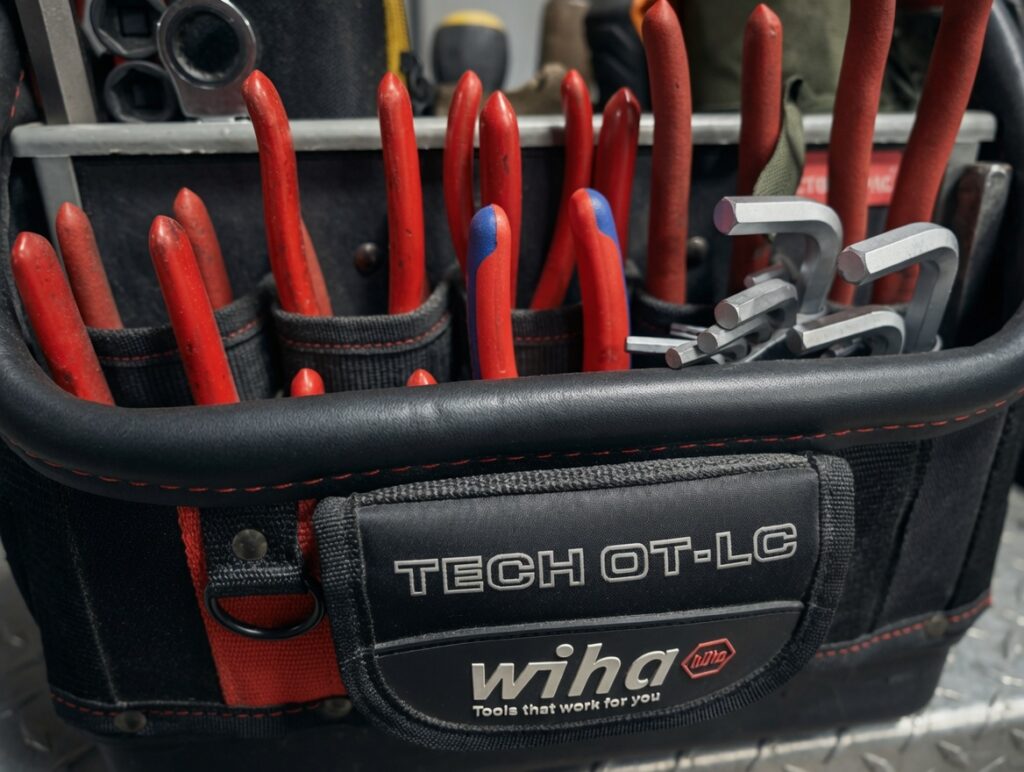
Don’t get me wrong—I’m not saying you should go out and buy a $300 screwdriver just because it looks pretty. That’s just bad math (and honestly, a bit of a waste). You have to categorize your gear by its duty cycle. I like to split things into “Daily Drivers,” “Occasional Tools,” and “Consumables.” Your daily drivers are the things that live in your hands every single shift—pliers, wrenches, maybe your impact driver. That’s where you invest. If it’s a Knipex or a Fluke, it’s because those tools are engineered to handle the constant abuse without stripping a bolt or giving a bad reading. On the flip side, if you’re looking at consumables like drill bits, saw blades, or specialty tools you use maybe twice a year, just buy the budget stuff. If a drill bit breaks, who cares? It’s meant to wear out. But when it comes to the core of your kit, you want to build a hybrid setup that prioritizes reliability where it actually matters for your workflow.
Metallurgy, Ergonomics, and Safety
We also need to talk about the stuff people usually ignore until someone gets hurt: metallurgy and safety ratings. When you use a cheap wrench or a low-end pair of pliers, you’re often dealing with inferior steel that can deform or slip under heavy load. I’ve seen plenty of “budget” tools strip a fastener clean off because the jaws just didn’t hold their shape, which is a nightmare when you’re trying to get a machine back online. And then there’s the electrical side. If you’re working on high-voltage panels, using a cheap, uncertified multimeter isn’t just a bad idea—it’s dangerous. Premium brands like Fluke spend the money on actual testing and certification so you know that when it says “zero,” it actually means zero. It’s about knowing your tools won’t fail you in a way that causes an injury or a catastrophic mistake. At the end of the day, a tool is a piece of safety equipment as much as it is a way to turn a bolt.
Step-by-Step
Step 1: Audit Your Duty Cycle
Go through your toolbox and group every tool by how often you touch it. Identify your Daily Drivers (used every shift), Occasional Tools (weekly/monthly), and Consumables (disposable).
Step 2: Apply the Reliability Hierarchy
Allocate your budget disproportionately toward those Daily Drivers. If a tool is critical to finishing a task without interruption, that’s where the premium money goes.
Step 3: Evaluate Risk vs. Replacement Cost
Ask yourself: “What happens if this fails?” If a multimeter failure means high-voltage danger or a screwdriver failure means a stripped screw on a $50k machine, buy the good one.
Step 4: Build the Hybrid Kit
Mix your premium core tools (pliers, impacts, meters) with budget-friendly consumables to optimize your total spend without sacrificing reliability where it counts.
Tools & Materials
- Knipex Pliers — Premium daily driver; superior grip and longevity compared to mid-tier options like Channellock.
- Fluke Multimeters — Industry standard for safety and accuracy; worth the premium in critical diagnostic tasks.
- Milwaukee/Makita Impacts — High-performance daily drivers that minimize downtime in heavy industrial applications.
- Consumables (Bits, Blades, etc.) — Budget-appropriate; these are expected to wear out or be lost frequently.
Pro Tips from the Shop
- Don’t buy a $500 tool for a job you do once a year—that’s just being a brand snob.
- If you’re buying budget pliers, at least make sure the pivot is tight; if it wobbles in the box, it’ll be useless in the field.
- Always check your multimeter’s CAT rating before touching a live panel. A cheap meter can literally explode in your hand.
Frequently Asked Questions
Is Knipex really better than Channellock?
For daily use? Yeah. The grip and the metallurgy are on another level, but if you’re just grabbing a bolt once a month, Channellock won’t kill you.
Should I buy cheap multimeters on Amazon?
If you’re working on anything with real power, no. It’s not worth the risk of inaccurate readings or safety failures.
Why shouldn’t I just buy all Milwaukee/Makita?
Because your budget isn’t infinite. Use that money for your impacts and meters, then use cheap bits and blades for everything else.