
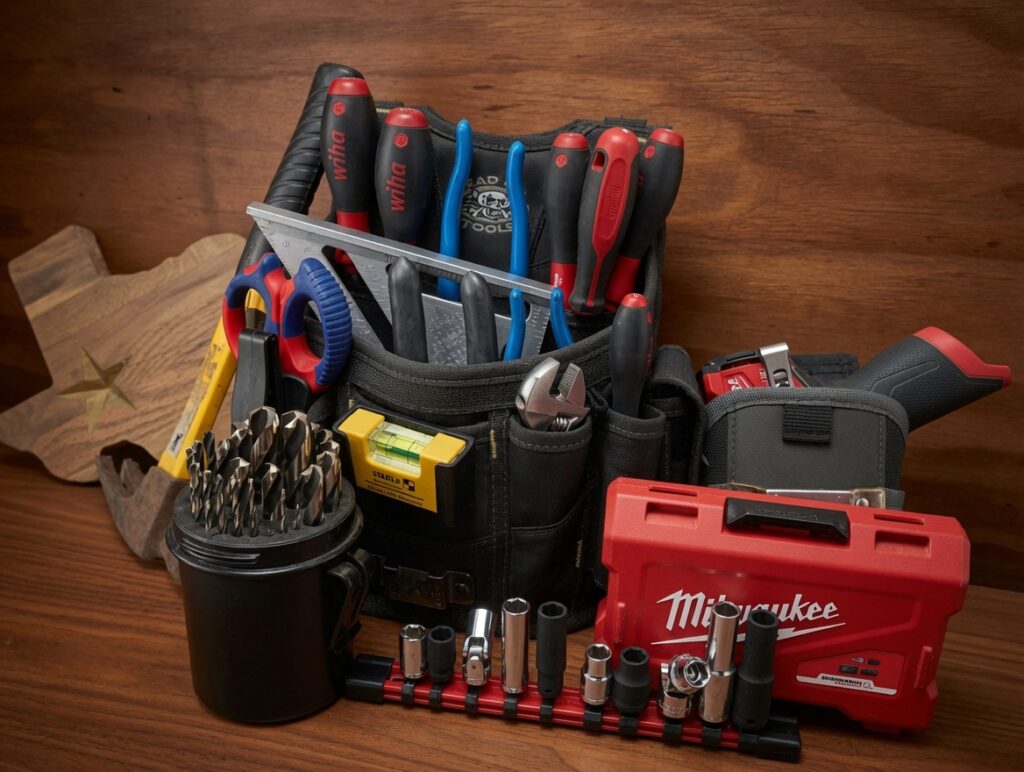
Hey folks, welcome back to the shop. Today we’re talking about broken bolt removal. Look, I’ll be honest with you—there’s no magic broken-bolt fairy that’s going to swoop in and fix your day. When a bolt shears off inside a machine, it’s easy to just stand there and start cussing. But after 10 years in industrial maintenance, I’ve learned that there’s a specific ladder of tricks you can climb to get out of most jams before you reach for the Easy-Out and make things way worse. Since it’s hard to film something when you’re actually mid-repair on a massive conveyor, I’ve used some simulated broken bolts here to show you the progression. We’re going from the easiest, least invasive stuff to the heavy-duty extraction methods. It’s about working smarter so you don’t end up spending four hours on a ten-minute job.
Key Takeaways: Broken Bolt Removal: Practical Escalation Strategies for Industrial Maintenance
Master the escalation ladder of bolt removal to minimize damage and downtime.
- Start with the least invasive method possible
- Use specialized gripping tools for mushroomed metal
- Left-hand drill bits are often self-extracting
- Always use anti-seize during installation to prevent future breaks
Difficulty: Intermediate | Time: Variable depending on corrosion
The Low-Hanging Fruit and Manual Extraction
Before you go grabbing the power tools, look at what’s actually around the break. Honestly, half the time you can solve the problem just by removing the obstruction. If a bolt breaks flush while holding a guard on a roller or a conveyor, your first move should be getting that guard off to see what you’re dealing with. Once you’ve got some breathing room, check if there are any threads left sticking out even a tiny bit. If it hasn’t been totally eaten by corrosion, you might be able to hand-thread it out or get a decent bite with standard pliers. It sounds simple, but I’ve seen guys jump straight to drilling when they could have just cleared the part and twisted it out by hand. If the bolt is truly a goner, don’t sweat the threads too much at this stage; your goal is just to get enough of a protrusion to move to the next step in the ladder.
Specialized Gripping for Deformed Ends
When you can’t hand-thread it, you need a serious grip. If the bolt has mushroomed or smeared at the end from being sheared, standard pliers usually just slip and make it worse. This is where tools like Knipex Twin Grips really earn their keep. The front clippers are designed to catch those smudged, uneven metal edges that regular pliers can’t grab. I like using them as a primary, but they’re great as a backup too. For the smaller diameter bolts, you might want to reach for your Alligator or Cobra pliers instead. Just remember: if you’re dealing with something heavily corroded or an engine block, expect it to be much more stubborn than a standard machine bolt. You aren’t just fighting the bolt; you’re fighting years of heat and oxidation that have basically welded the threads in place.
Mechanical Agitation and Left-Hand Drilling
If gripping isn’t working, it’s time to get a bit more aggressive with mechanical agitation. Grab a chisel and place it on one corner of the broken bolt, then use a ball peen, sledge, or even a claw hammer to work it. This is a patience game—you want to strike it to move the bolt just a few degrees at a time in a circular motion until it breaks loose. If that fails, move to left-hand drill bits. I learned this trick from an old guy named Wayne who had a photographic memory for machine layouts; he always carried these in his bag. You’ve got to punch a center divot into the bolt first so you don’t wander off-center. Use a cordless drill in reverse mode, and honestly, most of the time the bit will catch the spiral and back the bolt out while you’re still drilling. I recommend Century brand bits because they hold an edge much better than those cheap sets that just melt into the steel.
Precision Extraction and The Last Resort
If you’re in a shop environment with a drill press or a mill, use it. Using a stationary machine with a reversing drive gives you way more control than a handheld drill. If you keep the bit centered and apply steady downward pressure while running in reverse, I’d say you have about a 98% success rate of the bolt just coming right out—lefty-loosey works in your favor here. Now, if you’ve drilled a clean hole but the bolt is still being stubborn, that is finally when you reach for the screw extractor, or what most folks call an Easy-Out. Don’t use these as your first option. If you jam an extractor into a bolt that hasn’t been properly prepared with a clean hole, you’re just going to snap the extractor inside the bolt, and then you’ve turned a bad situation into a real nightmare.
Step-by-Step
Step 1: Clear the Workspace
Remove any guards or components obstructing the broken bolt to see the full extent of the damage.
Step 2: Attempt Manual Removal
If threads are protruding, try to back them out by hand or with pliers before using power tools.
Step 3: Apply Specialized Grip
Use Knipex Twin Grips or Cobra pliers to grab mushroomed or deformed metal ends.
Step 4: Agitate with a Chisel
Use a hammer and chisel to work the bolt a few degrees at a time to break the bond.
Step 5: Center Punch and Drill
Punch a divot into the center of the bolt, then use a left-hand drill bit in reverse mode.
Step 6: Use an Extractor if Necessary
Only once you have a clean, centered hole should you attempt to use a screw extractor.
Tools & Materials
- Knipex Twin Grips — Great for catching smudged or mushroomed metal ends.
- Left-hand drill bits (Century brand) — Better edge retention; often extracts the bolt during the drilling process.
- Center Punch — Crucial for ensuring your drill bit doesn’t wander off-center.
- Chisel and Hammer — Used to manually agitate the bolt to break through corrosion.
- Anti-seize — The best way to prevent this whole mess from happening in the first place.
Pro Tips from the Shop
- Always wear eye protection when hammering or drilling; metal shards fly everywhere.
- If you’re working on an engine block, be prepared for much higher heat and corrosion levels.
- Secure your workpiece in a vise whenever possible to ensure the drill stays centered.
Frequently Asked Questions
Why did my left-hand bit just snap?
You likely weren’t applying enough downward pressure or you used a cheap bit that couldn’t handle the heat.
Can I just use a regular drill bit in reverse?
No. A standard bit has a right-hand spiral. You need a left-hand bit to catch the threads and pull them out.
Is an Easy-Out my best bet?
Only as a last resort. If you snap one of those inside the bolt, you’re in deep trouble.