The Ecosystem Wars: A Blunt Breakdown of the Big Four (and the No-Names)
You already know the trap. If you do not, read The Battery Platform Trap first. That piece was the rule: pick a power system before you buy the first cordless body.
This piece is the next problem. You picked a platform. Now you have to pick a brand.
Do not let a yellow tag, a red endcap, or a free battery with purchase dictate the next five years of your bag. Kits feel small on day one. Five years later you own packs, chargers, oddball heads, and muscle memory. Switching brands is not a drill swap. It is a capital reset.
At Jester Metalworks the line still holds: Real Tools. No Jokes. This is a shop map of the big four cordless ecosystems, who they actually serve, and where the cheap stuff fails you.
The decision point
Most people buy tools like groceries. Whatever is on sale. Whatever a coworker swears by. Whatever matches the color of the truck they rented last summer.
That is how you end up with half a system and a full drawer of regret.
A cordless brand is not a logo. It is:
- A battery interface you will fund for years
- A charger family that either keeps up or stalls the job
- A catalog depth that either has the next tool you need or forces a second platform
- A duty cycle the tool was designed for, not the duty cycle you wish it had
- A retail path for packs when one dies on a Friday afternoon
Price of the first drill is the least interesting number on the box.
Ask the boring questions first:
- What work do you actually do, and how many hours a week?
- Will you need trade-specific tools later, or mostly house-and-garage gear?
- Can you get packs and bare tools near you without a special order every time?
- Are you paying for output you will use, or paying for a logo you will show off?
Answer those. Then pick a color and stay in it.
One more filter before the brand names: Ah is runtime. Current delivery is power. A fat amp-hour pack that cannot dump amps under load still browns out a grinder or high-torque impact. A high-output pack with less Ah can feel stronger on a hungry tool and die sooner. Match pack class to the tool, not the sticker alone.
Milwaukee (the pro standard)
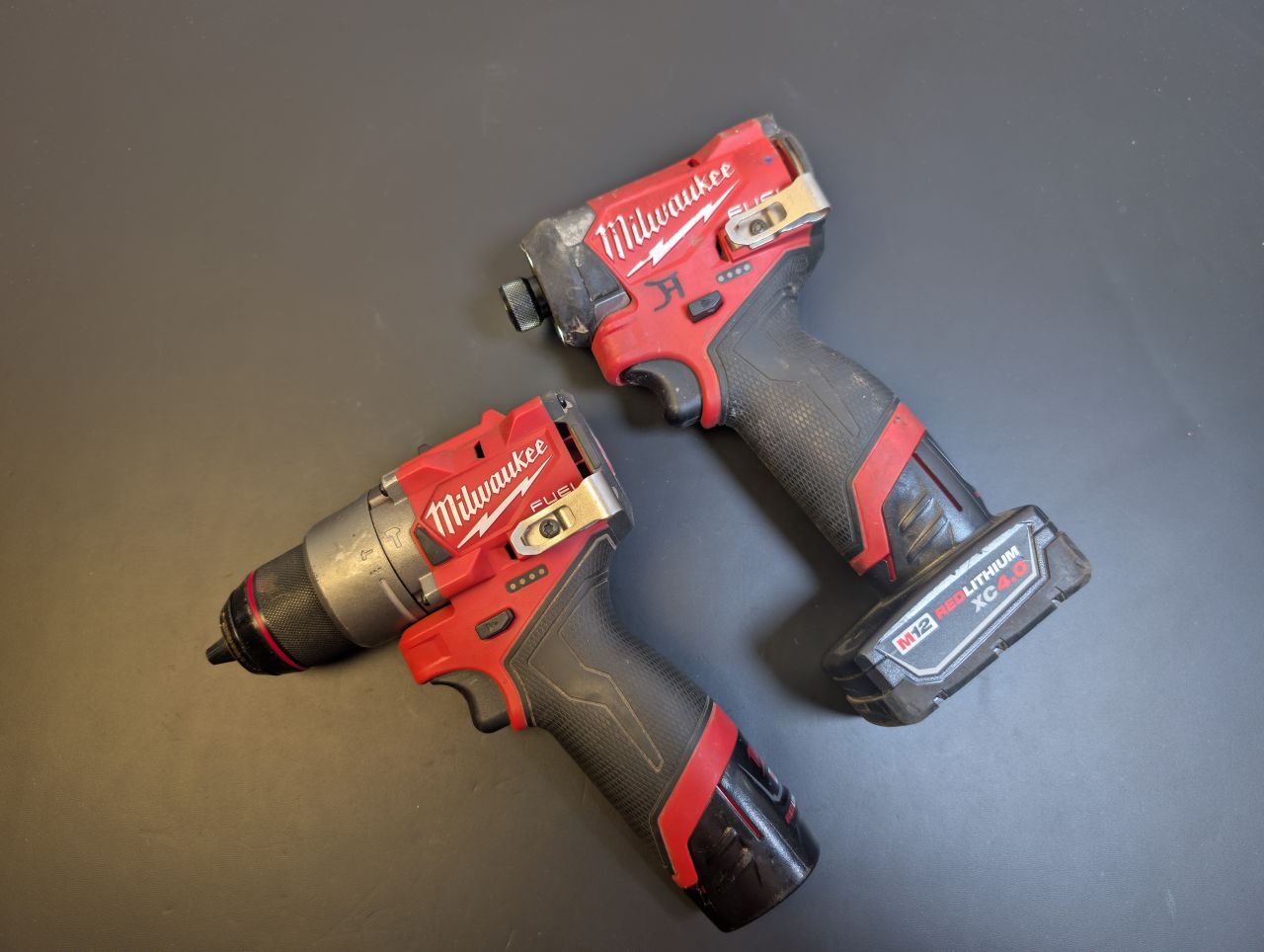
Milwaukee builds for people who live in the tool. Not people who visit it on Saturday.
M18 and M12 are not one system
Milwaukee’s main cordless lanes are M12 (12V) and M18 (18V). Same red family. Two pack interfaces. They do not share batteries.
That is not a gotcha if you plan it. It is a problem if you assume “Milwaukee battery” means every red tool on the wall.
- M12: Compact. Light. Fast into a bag. Great for fasteners, light cutting, inspection, plumbing and electrical work in tight spaces. Real power for the size when you buy the better packs and tools, not a toy line.
- M18: Full jobsite power and the deep catalog. Drills, impacts, saws, grinders, specialty heads, outdoor gear, lighting, and the high-draw tools that cook weak packs.
A lot of serious kits run both on purpose: M12 for the belt and the tight work, M18 for the heavy stuff. That is two platforms under one brand name. Budget for it if that is your path. Do not buy M12 packs expecting them to feed an M18 saw.
There is also MX FUEL for equipment-class gear (large outdoor and site equipment). Same company paint. Different power class. Treat it as its own commitment, not “another M18 pack.”
Pack tiers matter more than the red shell
Inside M12 and M18 you are not buying “a battery.” You are buying a current class.
Milwaukee’s REDLITHIUM ladder, in plain terms:
- Standard REDLITHIUM: Fine for drills, drivers, lights, and moderate intermittent load.
- HIGH OUTPUT (HO): Higher sustained current, cooler under load than older packs of the same size class. This is the step that keeps saws, grinders, and high-demand impacts from folding early.
- FORGE: Top tier for power, runtime, and charge speed on the packs that support it. You pay for it. Worth it when the tool is the bottleneck, not when you hang pictures twice a year.
Form factor labels (CP compact, XC extended capacity, HD high demand) tell you size and intended load, not magic. A compact pack on a high-draw saw is how you learn about thermal cutouts the hard way. Put the high-demand packs on the high-demand tools.
Specialized tool depth
This is where Milwaukee earns the pro reputation. The catalog is not just drill-and-driver cosplay. Trade-specific tools show up early and stay stocked: tubing cutters, press tools, cable tools, drain tools, installation drivers, metalworking heads, and a long list of “I did not know that was cordless” units.
If your work is plumbing, electrical, HVAC, or industrial maintenance, catalog depth matters more than the feel of the first combo kit. The day you need the weird tool, you want it on the packs you already own.
PACKOUT and related storage sit next to the power system. Not required. Useful if you already live in modular cases and want the same brand ecosystem for transport. Do not buy storage to justify packs. Buy packs to justify tools.
High output and the torque reputation
Milwaukee pushed hard into high-output packs and high-torque drivers. In practice that means:
- Better sustained power on hungry tools (saws, grinders, high-demand impacts)
- Packs that can deliver current without folding under load as fast as older low-output cells
- Tool electronics tuned around those packs (FUEL brushless tools and pack communication)
Torque numbers on the box are marketing until you hang on a stubborn fastener or bog a saw in wet lumber. The reputation is real enough on the job: red kits show up where people get paid to finish, not to babysit a stalling motor.
The pro tax
You pay for that depth and that output.
Bare tools cost more. Packs cost more. The “deal” still assumes the tool earns its keep. If you are hanging pictures and building a deck every other summer, you can start here, but you will fund a commercial catalog with hobby hours.
Who it is for: Pros, serious daily users, and anyone whose workplace already standardized red. Matching the house platform is free interoperability.
Who should pause: The homeowner buying one drill and a light, with no plan to use specialty tools or high-duty saws. You are not wrong for wanting quality. Just know you are paying pro prices for home duty.
What I actually run: At work the plant is mostly Milwaukee, so that is what I run on shift. Few headaches in daily use. I also keep an M12 compact impact and drill set — small, disappears into a bag, still does real work. That is the M12 lane done right.
DeWalt (the jobsite staple)
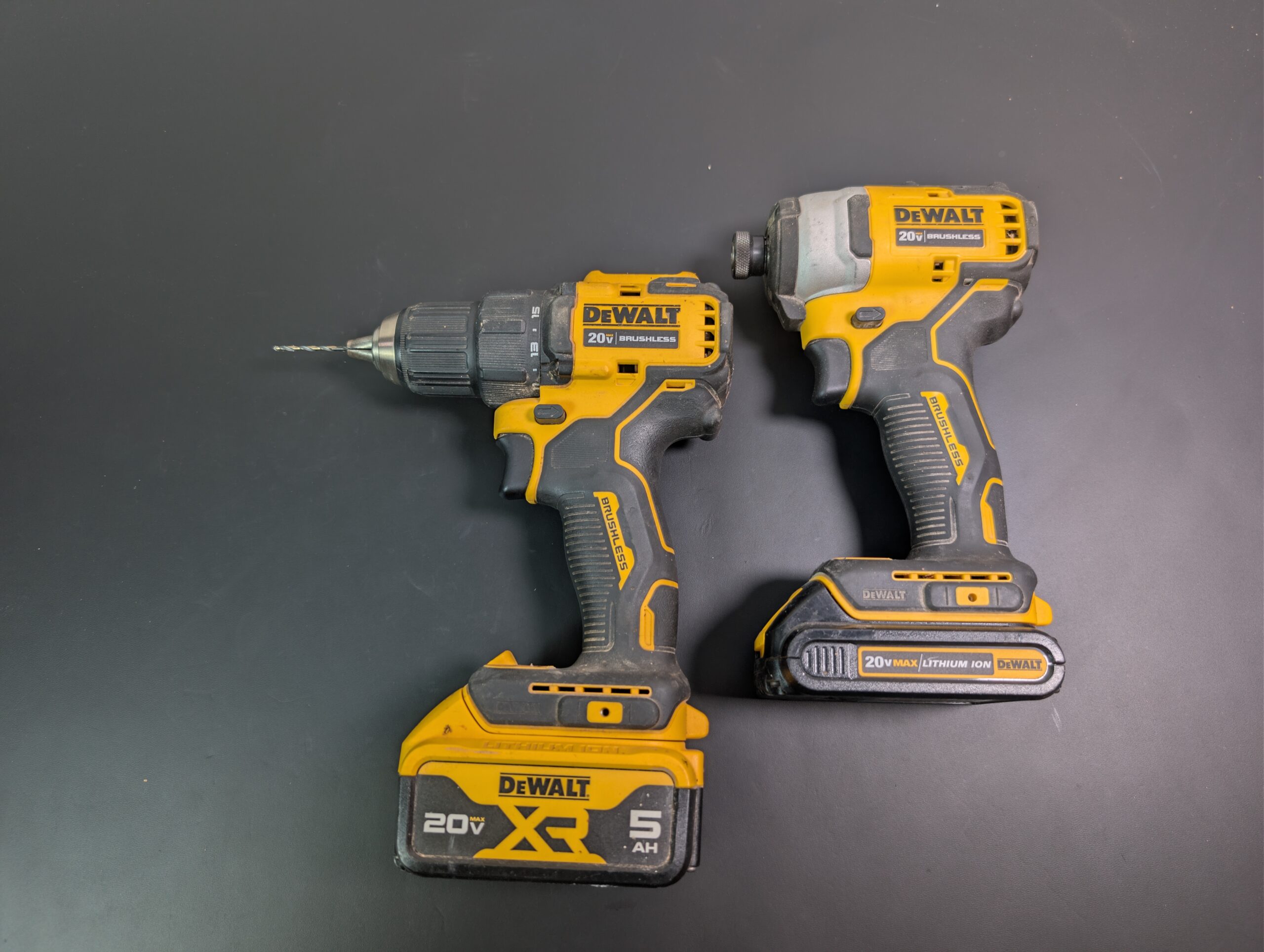
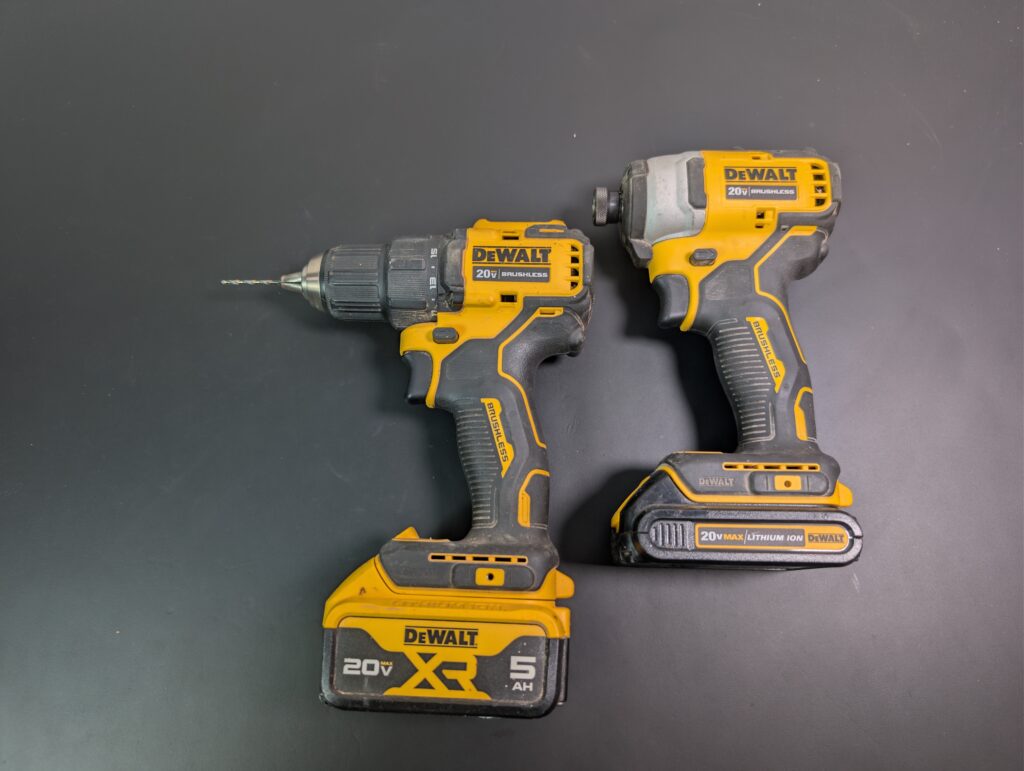
DeWalt is the yellow you can find almost anywhere tools are sold. That sounds boring. On a real schedule, boring availability is a feature.
20V MAX is the main bet for most people
When people say “DeWalt cordless,” they usually mean 20V MAX (DeWalt’s marketing name for their main 20-volt-class platform). There is also 12V MAX for compact work. Same brand paint. Different pack interfaces. A 12V MAX pack does not feed a 20V MAX tool.
For most home shops, remodelers, and general construction kits, 20V MAX is the lane. XR-branded tools and better packs are the step up inside that system. You do not need every badge on the shelf. You need enough runtime and enough tool bodies on one interface.
Pack ladder inside yellow
Inside 20V MAX, the names stack like this in real use:
- Standard / XR cylindrical packs: The workhorses. Ah rating mostly changes runtime. Put enough capacity on saws and outdoor tools.
- POWERSTACK: Pouch-cell packs. Lower profile, strong power density for the size, good on compact tools and anywhere bulk gets in the way. Same 20V MAX interface. Not a second ecosystem.
- FLEXVOLT: Dual-voltage packs. They run 20V MAX tools and step up for FLEXVOLT 60V/120V-class tools. This is how DeWalt bridges “normal cordless” and larger equipment without forcing a clean break. If you might want a bigger saw or outdoor unit later, FLEXVOLT capacity on the shelf is money that still works on your drill today.
POWERSHIFT and other equipment lines exist at the top end. Same rule as Milwaukee MX: do not assume every yellow pack feeds every yellow machine. Read the interface, not the paint.
Retail ubiquity is the real advantage
DeWalt’s strength is not a secret motor alloy. It is:
- Kits on the shelf at big-box stores when you need one today
- Bare tools and packs in stock without a specialty dealer run
- Easy replacement path when a pack dies mid-project
- Wide coverage across construction, woodworking-adjacent work, and serious DIY
If your “supply chain” is whatever the local store has on a Saturday morning, that matters. A premium catalog you cannot restock locally turns into downtime.
Middle ground without being soft
DeWalt sits in a practical middle for a lot of users. Strong enough for construction and daily site work. Approachable enough that a serious home shop can build out without funding a full trade van on day one.
It is not “less than pro” as a blanket statement. Crews run yellow all day. It is less obsessed with owning every niche trade SKU than Milwaukee in some categories, and less of a pure ergonomics cult as Makita. For general building and shop work, that middle is exactly what many people need.
What commitment looks like
Once you are in, bare tools get cheap relative to the power core. Two solid packs and a charger that keeps up turn every later purchase into a body, not a second ecosystem.
Who it is for: Home builders, remodelers, maintenance-minded DIYers, and anyone who wants a common platform they can expand for years without hunting obscure stock.
Who should pause: Nobody specific on the brand itself. The failure mode is buying DeWalt and two other colors because the saw was cheaper that week.
What I actually run: Home shop is DeWalt. Solid enough that I run two 1/4-inch impact drivers — one lives on the shop, one stays in the truck. Packs have been robust and hold a charge when I need them. Same batteries, same chargers, tool wherever the job is. That is the point of committing.
I run DeWalt at home and Milwaukee at work. That is not the charger graveyard. That is two complete systems for two environments — shop/truck versus plant tools that already match the crew.
The trap is mixing brands inside one bag because the endcap rotated. One platform per context. Shared packs where you live. Shared packs where you work. Not a rainbow of orphans under the bench.
Makita (the ergonomic choice)
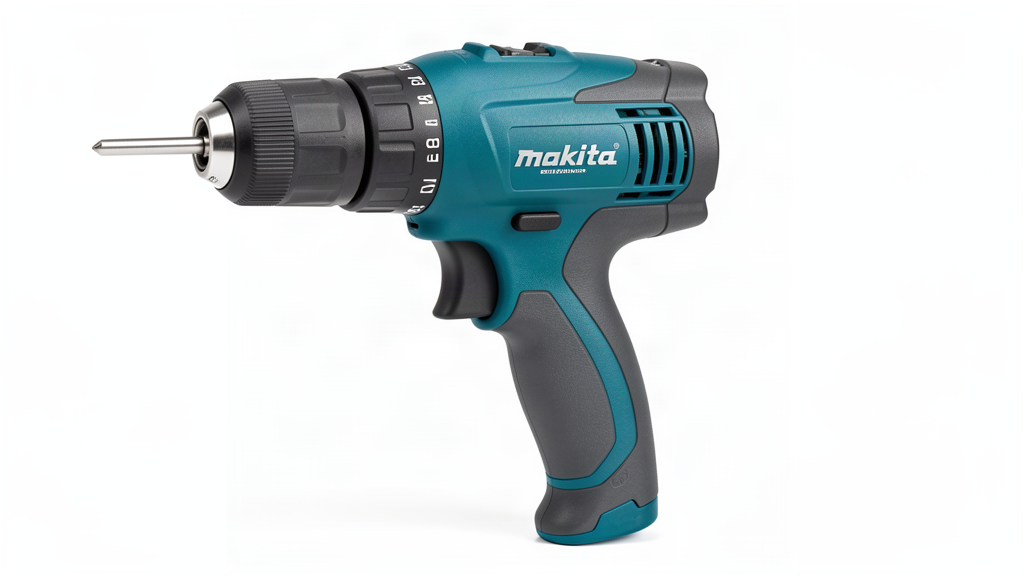
Makita is what people reach for when the tool has to feel right after the eighth hour, not just look loud on the shelf.
Build, balance, and “feel”
Makita tools often do. Spec sheets rarely capture balance. Users who care about wrist fatigue, control in awkward positions, and a tool that does not fight you tend to land here. That is not soft talk. Fatigue is a performance limit.
Battery management and the LXT lane
Makita’s main 18V push for most users is the LXT platform. Broad tool support, serious pack options, and a long track record if you stay inside that family.
- Stable power delivery under load
- Pack and tool electronics (Star Protection) that protect cells instead of cooking them when heat and current stack up
- Dual-port and rapid chargers that keep two packs in rotation without turning lunch into a charge session
- A catalog that covers site and shop without feeling like a toy aisle
CXT and XGT are not “free upgrades”
Makita also runs other voltage families:
- CXT: Compact 12V-max class. Different interface from LXT.
- XGT: 40V-max class for higher demand tools. Different interface from LXT.
Ryobi (the weekend warrior)
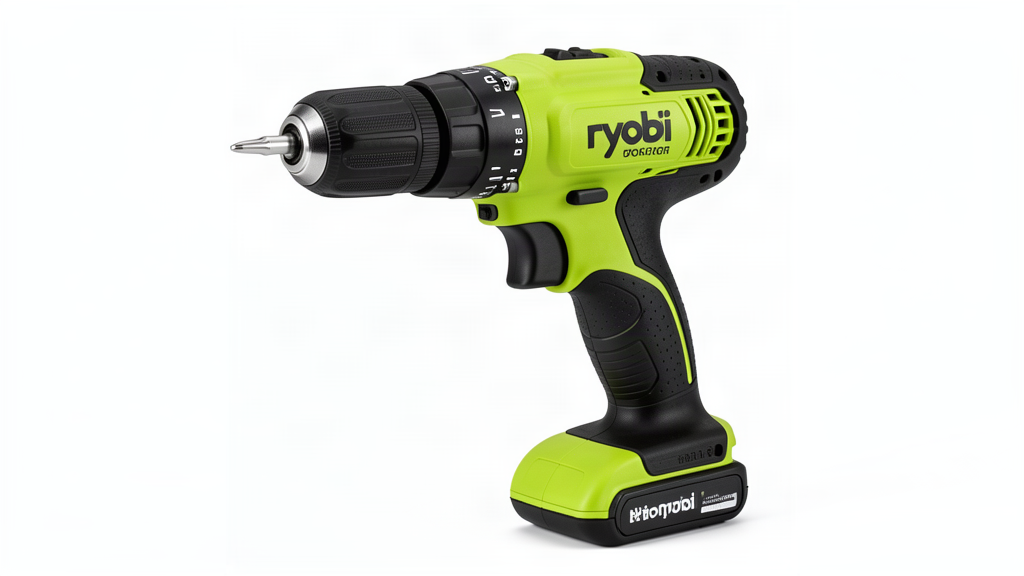
Ryobi wins on breadth and entry cost. It loses when you pretend it is something else.
ONE+ is the whole pitch
The ONE+ 18V system is the core. One pack family feeding a huge list of tools and, just as important, a huge list of not-quite-tools.
That is the real Ryobi move: drills and saws, yes — but also fans, lights, inflators, field speakers, coolers, sprayers, and the oddball home gadgets pros rarely put on a truck. For a house and garage, that breadth is the product.
HP vs the rest of the wall
Inside ONE+, HP (brushless) tools are the better daily drivers. More efficient, usually more power, less heat for the work done.
Breadth over depth
Ryobi is built so a home shop can fill out a life, not a trade van.
You can cover:
- Fastening and drilling
- Cutting and yard work
- Lighting and air movement
- One-off household tasks that do not justify a second pro platform
Perfect for home. Liability for daily commercial abuse.
If you are a homeowner or hobbyist, Ryobi can be the smart money. You get into a living ecosystem without funding contractor margins on every body.
If you are making a living with the trigger pulled all day, treat Ryobi as a maybe for light secondary tasks, not as the spine of the business. Downtownt, pack heat under continuous load, and tool longevity under commercial duty are where “good enough for the garage” becomes expensive.
The “cheap” trap
Do not just buy a drill. Check the oddball availability.
A real platform assumes you will want the next tool. Cheap systems assume you will throw the first one away.
Blunt comparison table
No trophies. Just the map.
| Platform | Duty cycle fit | Tool breadth | Retail availability | Value for money |
|---|---|---|---|---|
| Milwaukee | Daily pro / high abuse | Deep, especially trade-specific | Strong; pro shops + major retail | High if you use the depth; expensive if you do not |
| DeWalt | Daily jobsite + serious DIY | Broad construction / shop coverage | Dear: easy to build and restock | Strong middle: easy to build and restock |
| Makita | Pro and serious user, long days | Full ecosystem; check niche SKUs | Good; sometimes less front-of-store than Y/R | High if feel and balance matter to your work |
| Ryobi | Home / weekend / light intermittent | Huge house-and-garage range | Excellent at big-box | |
| No-name | Daily disposable | Thin; stalls after starter tool | Spotty; replacements vanish |
How to choose without turning it into a religion
- Match platform to load: Milwaukee is the default for pros. DeWalt is the middle ground. Makita is ergonomics. Ryobi is house and garage.
Final word
- Milwaukee if you live in the work.
- DeWalt if you want jobsite-capable tools without drama.
- Makita if feel, balance, and control matter.
- Ryobi if the battlefield is the house and garage.
Disclosure: Some links on jestermetalworks.com may be affiliate links…