You already picked red. That was the brand decision.
Disclosure: I buy most of my own tools, and sometimes companies send me items to test. Nobody has ever paid me for an opinion. As an Amazon Associate I earn from qualifying purchases.
Now comes the interface decision. Milwaukee is not one battery system with two sizes. It is two cordless platforms that share a paint job and a dealer network. M12 packs do not feed M18 tools. M18 packs do not feed M12 tools. Same family name. Different stems, different voltages, different electronics.
If you skip that fact, you will build a charger graveyard inside one brand. That is not smarter than mixing three brands. It is just redder.
This piece branches off The Ecosystem Wars and The Battery Platform Trap. Those covered why platform lock-in matters and where Milwaukee sits against the other big names. This one is the shop map once you are already standing in the red aisle: which voltage lane, which packs, why the catalog costs more, and how to run both without drowning in chargers.
At Jester Metalworks the rule still holds: Real Tools. No Jokes. You do not buy a logo. You buy an interface and the tools that hang off it.
The red line
Milwaukee sells three main power classes most people will actually meet:
- M12 — 12V max cordless tools
- M18 — 18V cordless tools
- MX FUEL — equipment-class gear (big outdoor and site equipment)
MX FUEL is its own commitment. Leave it out of this decision unless you are buying equipment, not hand tools.
M12 and M18 are the daily fight. Both use REDLITHIUM packs. Both talk to the tool through REDLINK-style pack electronics. Both have FUEL brushless models that outwork the brushed stuff under the same brand. None of that makes the batteries interchangeable.
The stem geometry is different. The voltage is different. The tool expects its own pack family. Third-party “adapters” exist. Do not use them. You void warranty and you ask a 12V tool to drink from an 18V well. That is not clever. That is how electronics die.
So the real question is not “Milwaukee or not.” You already answered that. The question is how deep you go into each interface, and whether the premium SKUs on that catalog will ever earn their keep for your work.
The voltage divide (M12 vs M18)
M12: the in-the-bag specialist
M12 is built for weight, access, and all-day carry. Not for framing a house or spinning lug nuts off a truck.
Nominal pack voltage sits lower. Peak current and continuous power sit lower than M18. What you get back is a tool that fits between studs, under a dash, inside a cabinet, or on a belt without dragging your hip into next week.
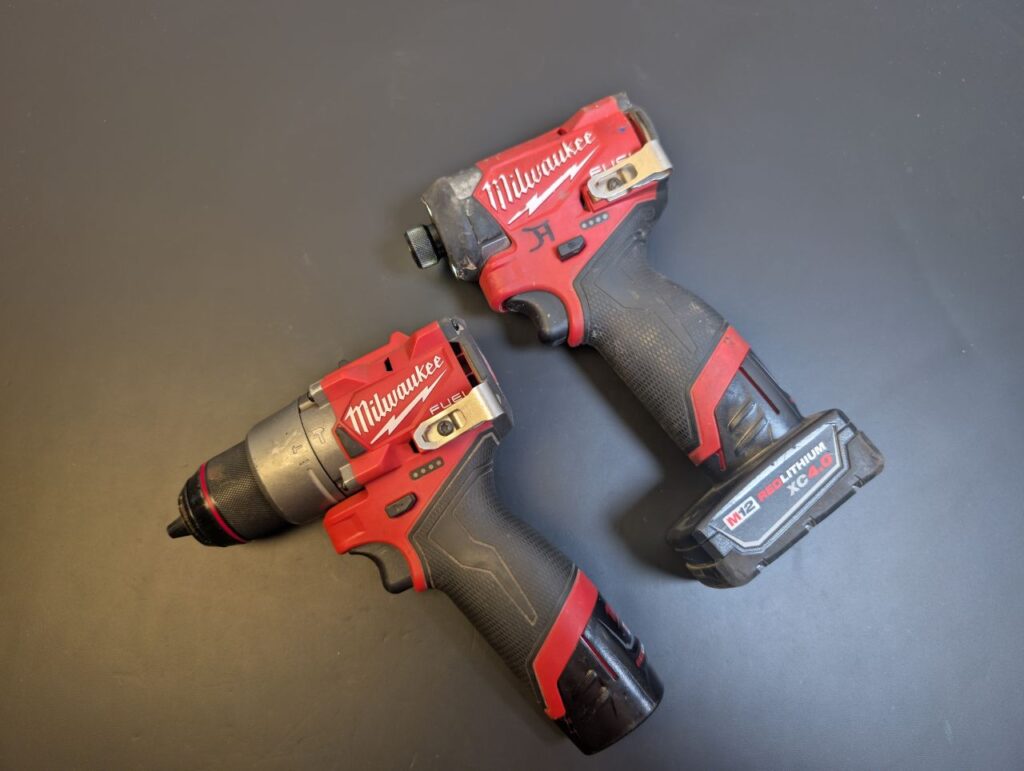
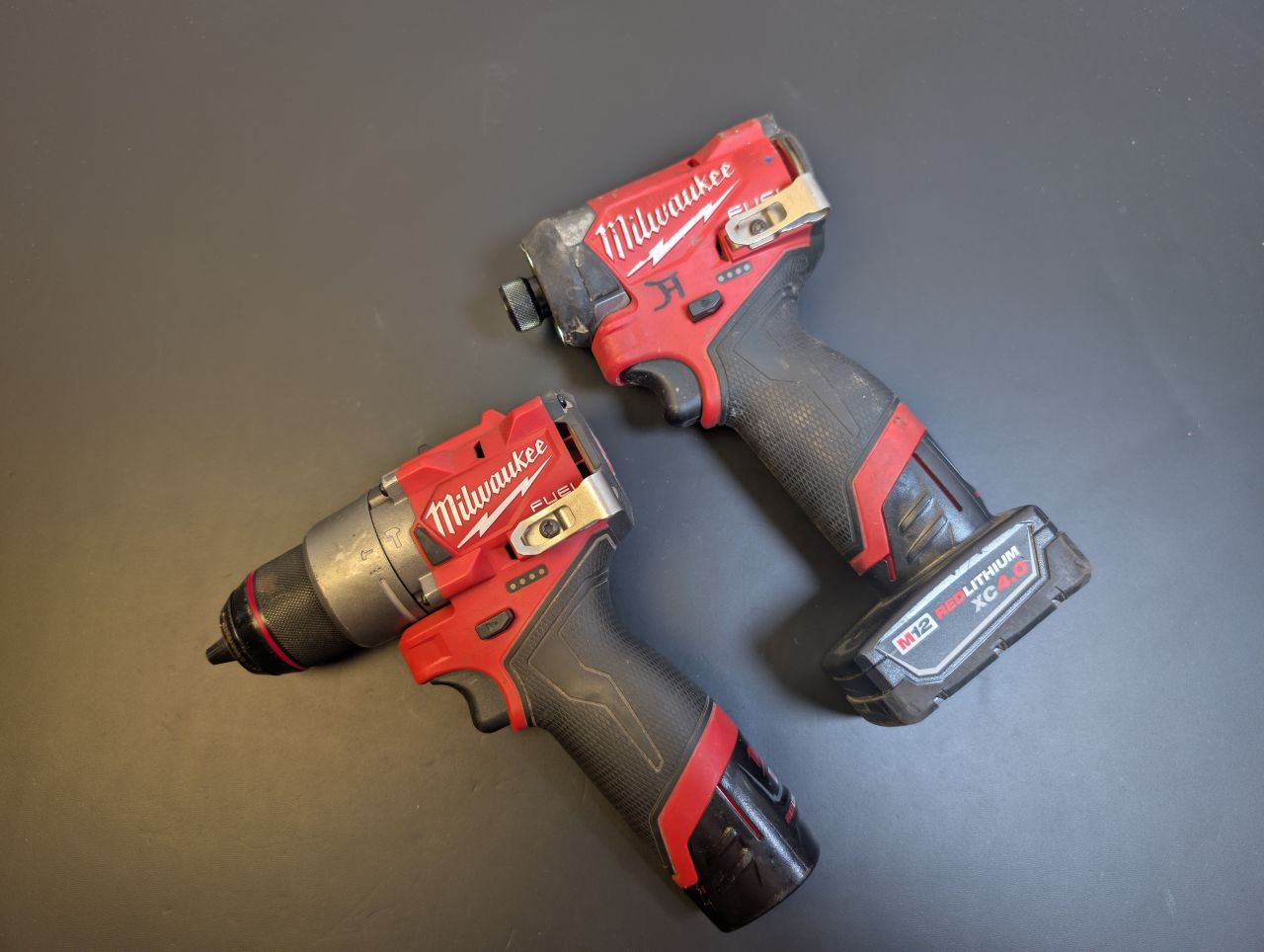
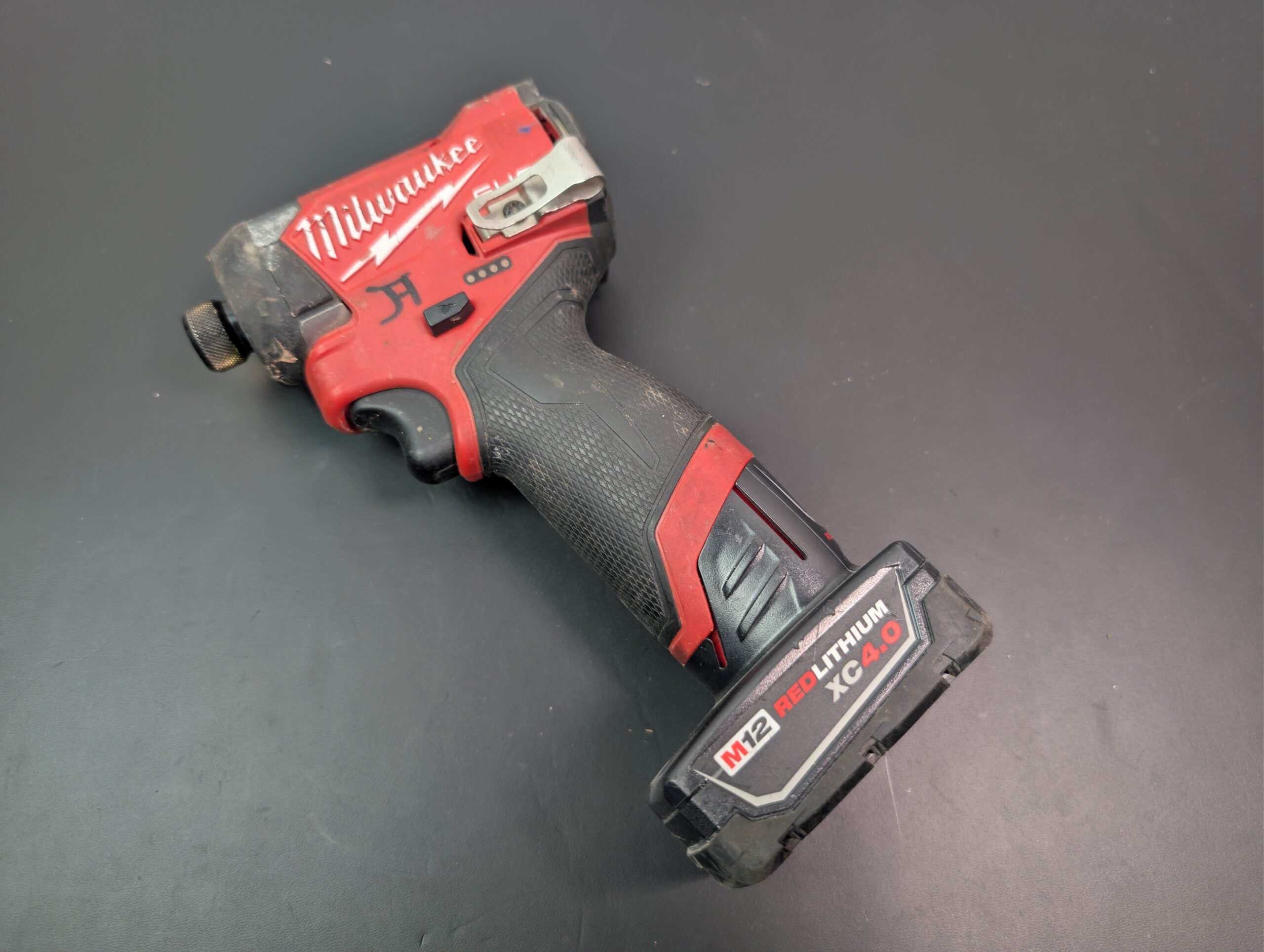
M12 compact drill / impact driver combo
This is the entry that makes people stay on M12.
A modern M12 FUEL 1/4″ hex impact and compact drill are not “homeowner toys with pro stickers.” On the right pack they drive real fasteners, spin real bits, and live in a small pouch. Bare tool weight on the impact side is often under two pounds. Length stays short enough that you stop fighting the tool and start fighting the fastener.
What they are good at:
- Cabinet screws, electrical boxes, light metal fab fixtures
- Overhead work where an M18 combo turns into a shoulder tax by noon
- Service calls where half the job is access and the other half is not tearing up finished space
- Daily plant and shop fastening that never needs 1/2″ impact torque
What they are not:
- Your primary deck-building driver for structural lags all day
- A substitute for a high-torque 1/2″ impact wrench
- A platform that will absorb every heavy tool you might want later
If most of your week is fasteners under 3″ and holes under a hole-saw you can still hand-feed, the M12 combo earns its space. If your week is timber, concrete anchors, and seized hardware, start elsewhere and add M12 later for the tight work.
M12 detail sander
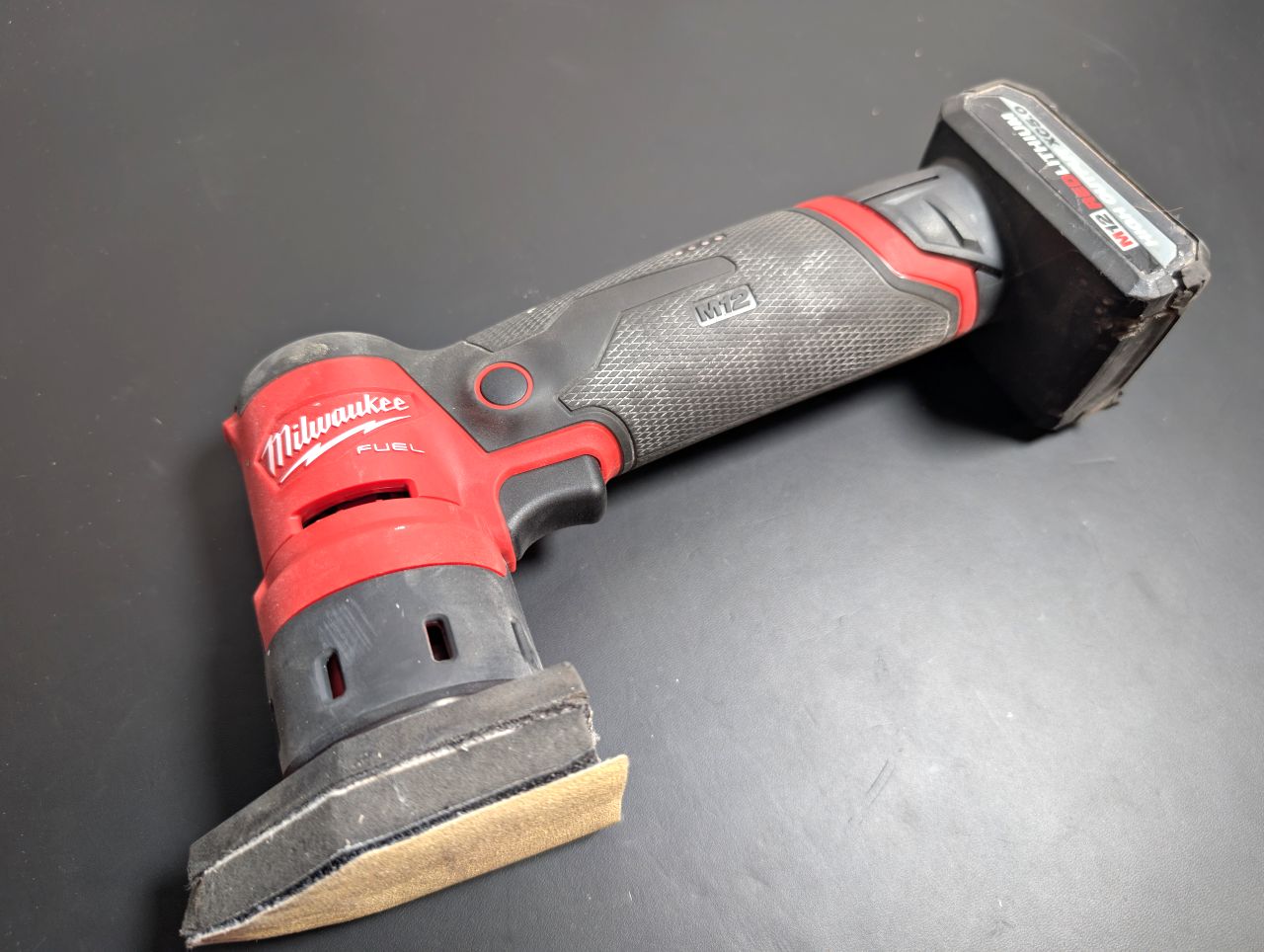
This is the other half of the M12 argument: specialty form factors that would be stupid heavy on 18V.
A compact random-orbital or detail sander on M12 exists because finish work and repair work punish bulk. You are sanding a door edge, a dash panel, a welded corner, a patch. You need control and low fatigue more than you need a full-size pad spinning forever on a HO pack.
Runtime still matters. Ah still matters. But the current draw on a small sander is not the same as a high-torque impact wrench dumping hundreds of amps into an anvil. A solid XC pack on a detail sander is about finishing the panel without a mid-job swap, not about surviving a voltage cliff under stall load.
That is the M12 pattern in general: lower peak demand, higher value on size, higher value on belt carry.
M18: the workhorse lane
M18 is where Milwaukee put the jobsite muscle and most of the deep catalog.
Higher voltage means more power headroom for the same motor design philosophy. Bigger packs mean more energy on board. The tool bodies get larger. The batteries get heavier. You stop optimizing for “fits in a pouch” and start optimizing for “does the cut, the hole, or the breakaway without stalling.”
M18 drill / impact combo
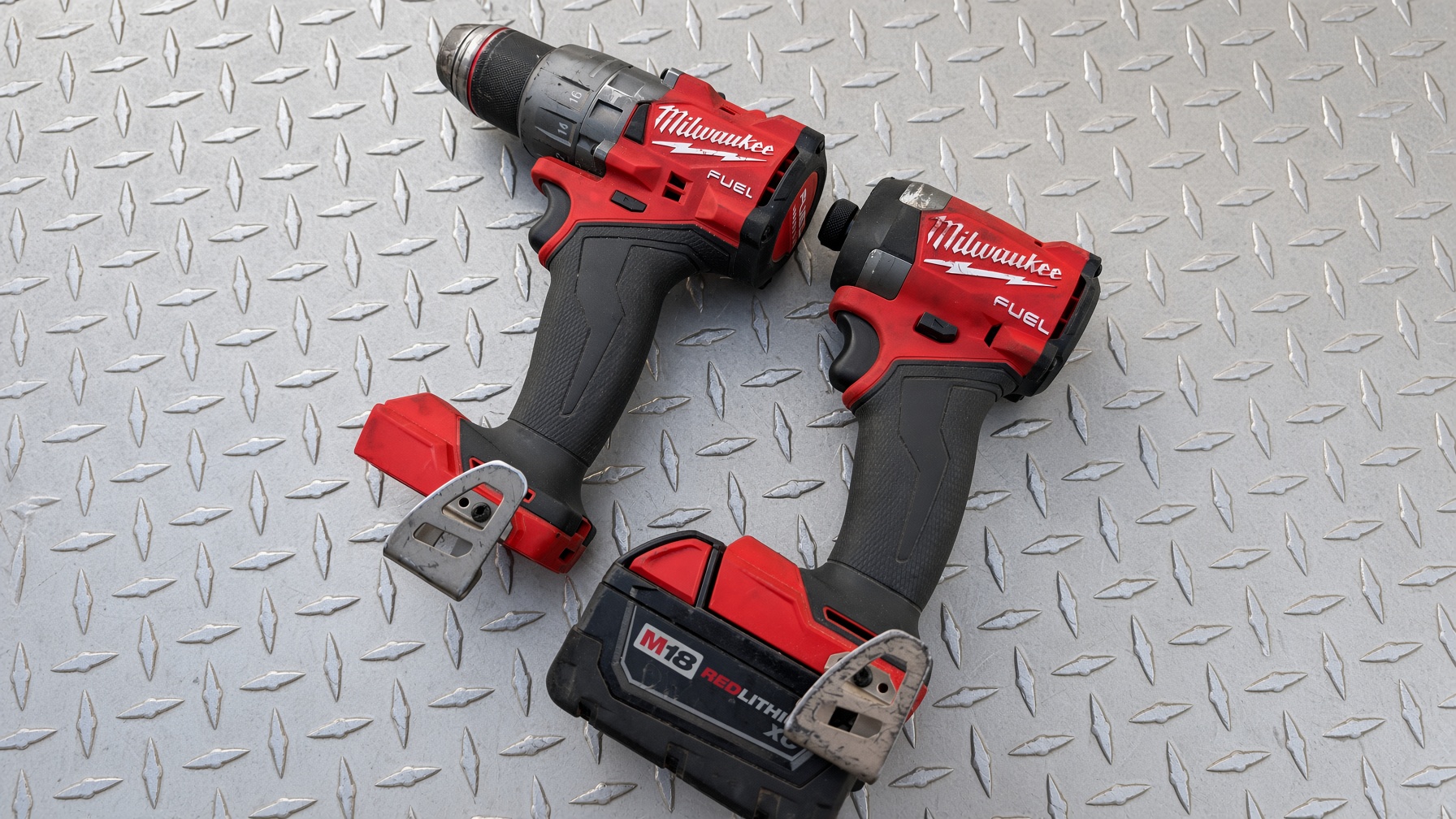
The standard M18 FUEL drill and 1/4″ impact combo is the backbone kit for a reason. More torque ceiling than M12. Better continuous work on dense material. Enough catalog support that the next bare tool you need is usually already on the wall.
Use it when:
- You are driving structural fasteners, not just #8 screws
- You are drilling larger holes or longer runs in wood and metal
- You want one platform that can also grow into saws, grinders, and lights without a second brand
It still is not the whole story. A 1/4″ hex impact driver is a fastening tool. It is not a breaker bar with a motor.
M18 1/2″ drive impact wrench
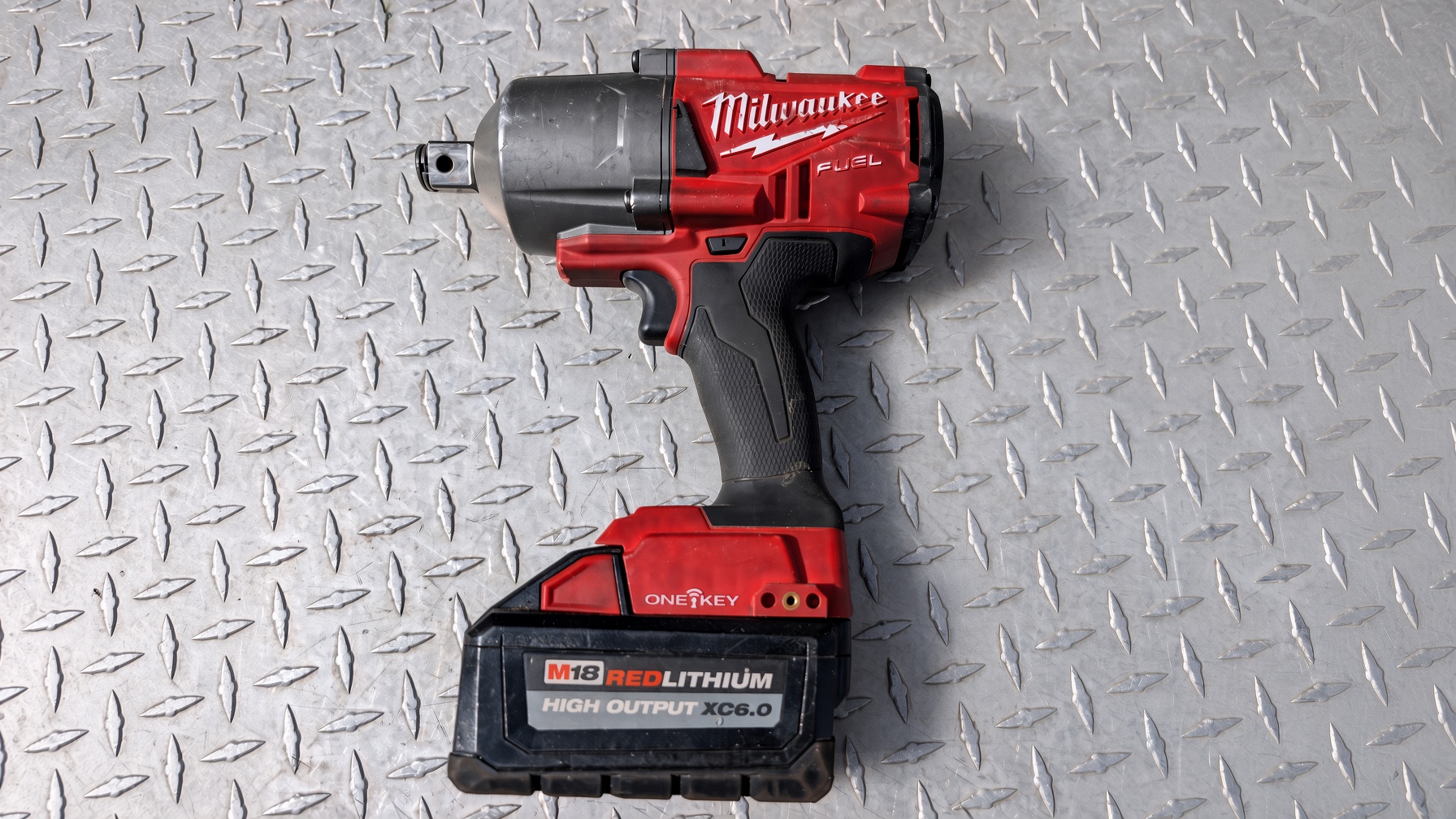
This is where you leave “fastening” and enter “breaking things loose.”
A current M18 FUEL 1/2″ high-torque impact wrench (think the 2967-class tools) is rated in the ballpark of 1,100–1,200 ft-lbs fastening and 1,500–1,600 ft-lbs nut-busting, depending on pack. Milwaukee’s own numbers climb when you put a FORGE XC6.0 under it versus a lesser pack. That is not marketing fluff in the abstract. It is the tool telling you that pack current delivery changes peak output.
What that means in the shop:
- Lug nuts, suspension hardware, rusty flange bolts, seized equipment fasteners
- Work where a 1/4″ driver just rattles and heats up
- Jobs where a mid-torque wrench is enough for cars, and high-torque is what you want for trucks, plant equipment, and “this has been on since 2004”
Weight jumps. A bare high-torque unit is already near six pounds before the pack. On a HO or FORGE pack you are swinging real mass. That is fine when the alternative is a cheater pipe and a busted knuckle.
If you never fight frozen hardware, you do not need this tool. If you do, this is one of the clearest reasons to own M18 at all.
Side-by-side without the brochure
| M12 | M18 | |
|---|---|---|
| Voltage class | 12V | 18V |
| Packs cross? | No | No |
| Typical pack range | ~1.5–6.0 Ah | ~2.0–12.0 Ah (HD and FORGE in the mix) |
| Best daily feel | Light, short, belt/pouch | Full-size power, longer runtime |
| Weak spot | Peak torque and hungry tools | Weight and bulk in tight spaces |
| Typical first kit | Compact drill + 1/4″ impact | Drill + 1/4″ impact, then saws/impacts |
| Specialty path | Ratchets, lights, cutters, small press, detail work | High-torque wrenches, saws, grinders, press, outdoor, deep trade SKUs |
Neither lane is “better.” They answer different load and access problems. Pretending one pack family covers both is how people waste money inside a brand they already trust.
The specialized edge (why the pro tax exists)
Pros do not pay Milwaukee prices because the logo looks tough on Instagram. They pay because the catalog has tools you cannot casually replace with a big-box “close enough.”
The catalog is the product
A generic 18V drill is a commodity. A cordless press tool that joins copper or PEX to a standard, with jaws you can service and packs you already own, is not a commodity. Neither is a cable cutter sized for the wire you pull every day, a drain machine that shares your site batteries, or a controlled-torque installation driver that keeps you from stripping a run of fasteners.
That depth is the pro tax.
You are funding:
- Trade-specific R&D that weekend kits never justify
- Dealer and service paths for tools that have to work Monday morning
- Pack electronics and motor platforms that survive daily duty, not quarterly projects
- A bare-tool ecosystem so you can buy the oddball head without buying another orphan charger
If you only ever need a drill, a driver, and a light, you can get competent tools cheaper. If your work keeps asking for the weird tool, the expensive platform starts looking like the cheap one — because the alternative is renting, borrowing, or owning a second dead-end system.
Prime example: M18 FORCE LOGIC press tool
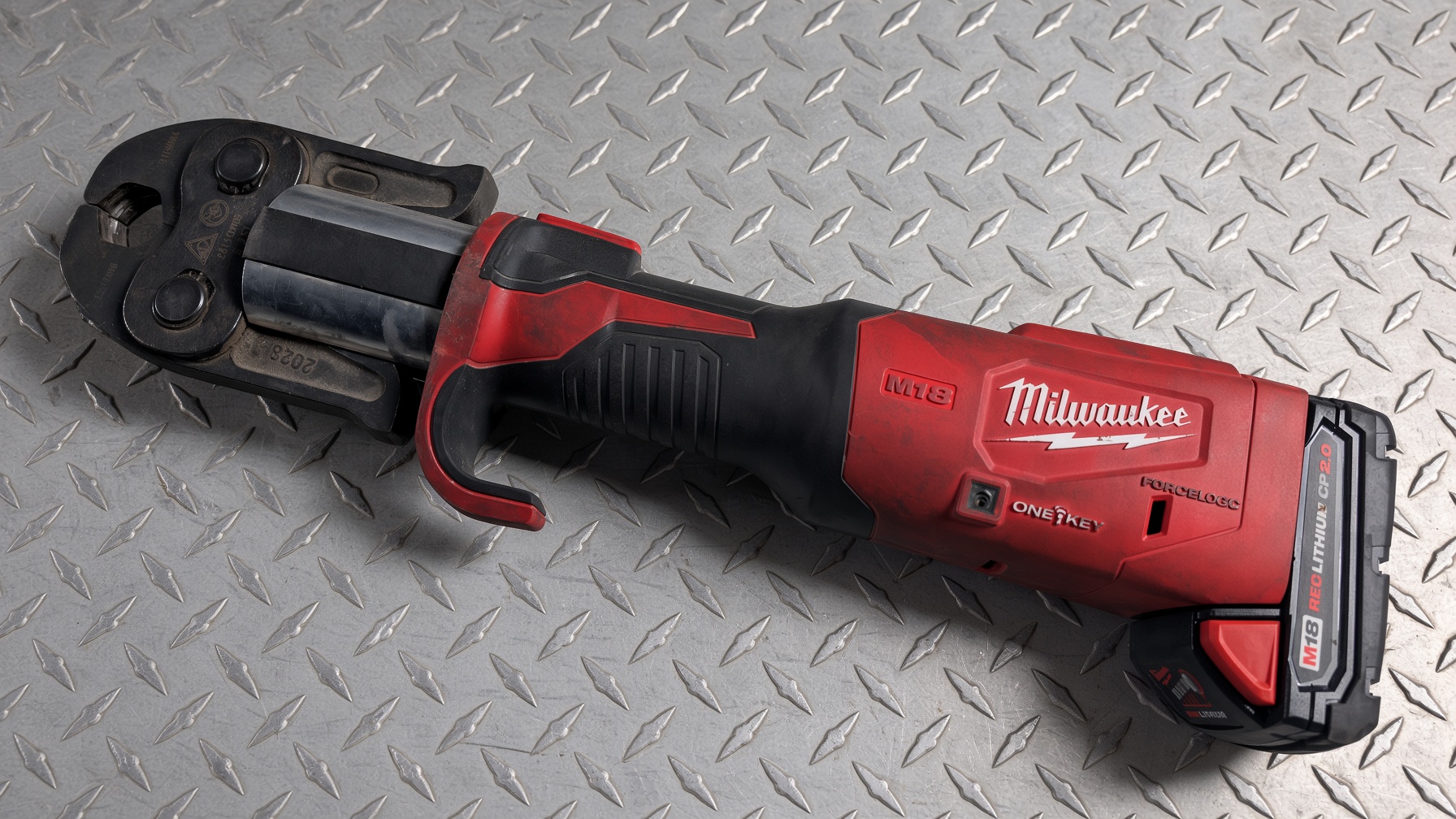
The M18 FORCE LOGIC press tool is the cleanest illustration.
You do not buy a press tool because it is fun. You buy it because soldered or threaded joints are slow, risky in tight remodels, or banned by the spec. A press cycle on copper or approved fittings is a paid workflow. The tool, the jaws, and the calibration culture around it are the job.
Why it only makes sense on a platform:
- The body is expensive. Nobody impulse-buys a press tool the way they grab a drill kit on Black Friday.
- The jaws and accessories are a second bill. You are buying a system inside the system.
- The battery is not optional theater. Larger presses and bigger pipe sizes draw real current. Techs learn fast that a weak pack that “works on the drill” can struggle on bigger press cycles. Stepping up Ah and output class is not vanity. It is finishing the joint without the tool complaining.
- You already own the packs. The whole point of platform lock-in is that the specialty head lands on capital you already spent.
That is the pro tax in one tool. You are not paying extra for red plastic. You are paying so the oddball that prints money on your job shares power with the drill you already trust.
M12 has press options too for lighter, tighter work. Same logic, smaller envelope. The point stands either way: specialty tools are why deep catalogs cost more up front and save more over a career.
When the tax is a bad deal
Skip the guilt. The pro tax is a bad deal when:
- You will never buy past a basic combo and a saw
- Your workplace standardizes a different color and you cannot share packs
- You are funding HO and FORGE packs for tools that sleep in a drawer
- You confuse “pro brand” with “I will suddenly do pro hours”
Buy the depth you will use. Rent or borrow the once-a-year unicorn. Do not build a museum.
The battery math: REDLITHIUM realities
Ah is the number everyone shops. It is not the only number that matters.
Ah is energy. Current delivery is attitude under load.
Amp-hours describe how much charge the pack stores, roughly proportional to runtime at a given draw. They do not automatically describe how hard the pack can push amps into a stalled impact or a saw in wet lumber.
Power at the tool is about voltage and current. Energy on board is about capacity. A pack can have solid Ah and still sag when the tool demands a surge. Voltage sag is the soft, slow, weak feeling right before the electronics protect the pack or the motor falls on its face. Thermal cutout is the hard stop when cells or FETs get too hot.
So when someone says “just get more Ah,” ask: more Ah of what class?
How to read a Milwaukee pack label
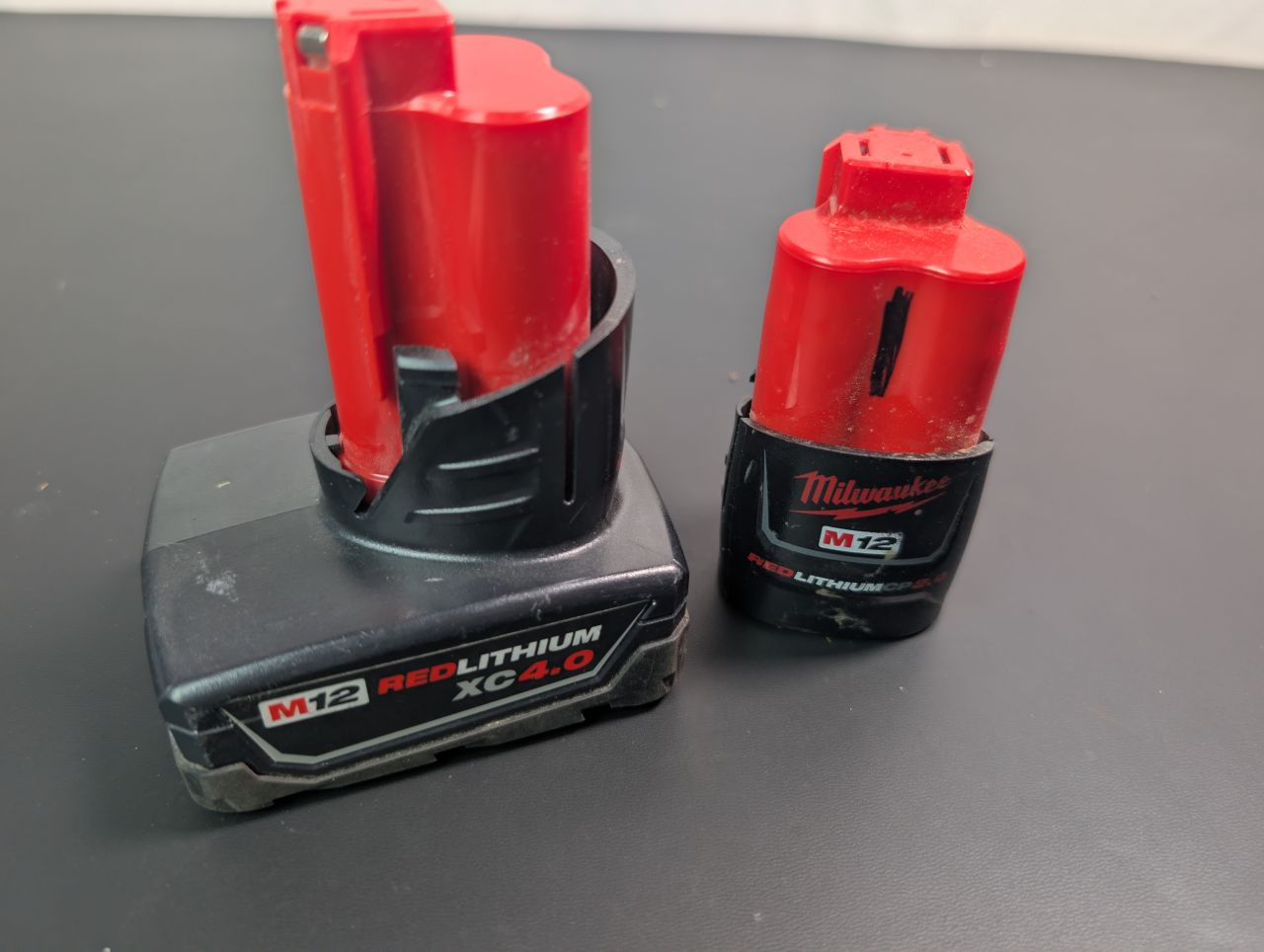
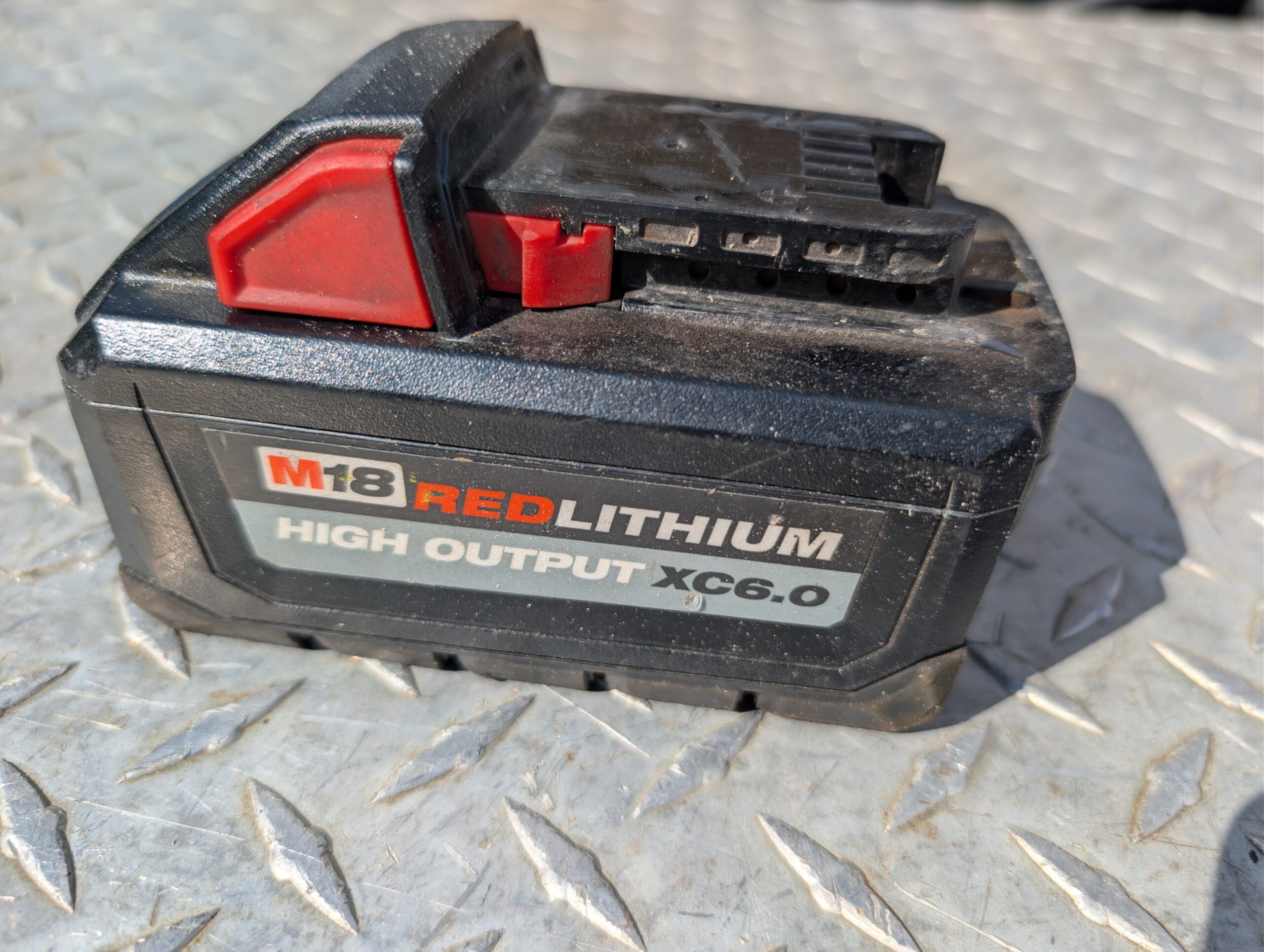
A label like M18 REDLITHIUM HIGH OUTPUT XC6.0 is not decoration. Read it left to right:
- M18 — platform and voltage family
- REDLITHIUM / HIGH OUTPUT / FORGE — technology tier
- CP / XC / HD — form and duty type
- 6.0 — amp-hour capacity
Tiers, in shop terms:
- REDLITHIUM (standard): Fine for drills, drivers, lights, intermittent load
- HIGH OUTPUT (HO): Higher sustained current, runs cooler under load than older packs in the same conversation. Milwaukee’s own figures put M18 HO around 50% more power and cooler operation versus prior-gen packs in that marketing comparison; M12 HO is called out around 25% on the same kind of claim. Treat the percentages as directional, not gospel. Treat the behavior as real: HO packs keep hungry tools happier.
- FORGE: Top tier. Newer cell tech (including pouch / tabless designs on some SKUs), high power in a smaller, lighter shell on packs like the M18 FORGE XC6.0. Can match high power levels of much larger HO HD packs while carrying less runtime than a 12.0 Ah brick. Power level and runtime are not the same axis.
Types:
- CP (Compact): Light. Less capacity. Belt and overhead work.
- XC (Extended Capacity): Daily workhorse balance.
- HD (High Demand): Big packs, long runtime, high draw tools. Heavy on the tool.
Do not confuse HIGH OUTPUT (tier) with HD (type). People mix those up constantly. HO is how the cells and electronics behave. HD is how big and greedy the pack is built to be.
Same Ah, different power
Milwaukee’s own power-level framing makes the point clean:
- HO XC6.0 and FORGE XC6.0 can share a 6.0 Ah runtime number and still sit on different power levels
- HO HD12.0 can share a high power level with FORGE XC6.0 and still offer double the Ah runtime
Runtime sticker ≠ punch under load.
That is why a FORGE XC6.0 can wake up a high-torque impact wrench, and why a fat older pack can still win a pure all-day saw shift if energy on board is the bottleneck.
Match the pack to the tool, not the shopping cart
High-draw example: M18 1/2″ high-torque impact wrench
This tool wants current. Breakaway events are short, violent, and mean. Undersize the pack and you get:
- Soft blows that sound busy and do nothing
- Voltage sag you feel in the handle
- Heat stacking if you keep hammering
- Output below the number printed next to the better pack on the spec sheet
Put a HO or FORGE pack under it when you care about actual nut-busting. Use the big HD packs when you also care about a long day of repeated breaks. Do not expect a tiny CP pack to pretend it is a shop air compressor.
Low-to-moderate draw example: M12 detail sander
This tool wants balance and enough Ah to finish the panel. It does not need HD theater. A quality CP or XC pack matched to the tool weight is the right call. Over-packing a detail sander just lifts the center of gravity and buys runtime you may not need.
Middle example: M12 or M18 drill/driver
Most fastening is pulsed load. Standard or HO XC packs are the sane default. Step up when you are in metal all day, using large bits, or sharing packs with hungrier tools on the same platform.
Charger reality
Packs only matter if they get back on the tool.
If you run both M12 and M18, buy a multi-voltage charger family early (Milwaukee’s M18 & M12 rapid/super/multi-voltage units). One charger lane, two pack stems. That single decision prevents the dual-platform setup from turning into a counter full of bricks and wall warts.
Single-platform chargers are fine if you are staying in one voltage. Dual-platform is the tax you pay once to avoid paying every month in friction.
Building a two-platform bag
A lot of pros end up here on purpose. The mistake is ending up here by accident.
The clean split
M12 on the belt and in the finished space. Compact drill/impact, ratchet, light, small cutter, detail sander, inspection gear. Anything you carry for hours or shove into a cavity.
M18 on the cart, in the truck, or on the open job. High-torque wrench, full-size saws, grinders, hammer drill, press tool, anything that eats packs and rewards mass.
That split matches how bodies fail: shoulders and wrists quit before the marketing copy does.
How to avoid the charger graveyard inside one brand
- Pick a primary voltage first. If 80% of your week is service and fasteners, primary is M12. If 80% is build, demo, and breakaway, primary is M18.
- Buy packs for the hungriest tool on that platform, then reuse downward. A pack that can feed the impact wrench or saw will feed the drill. A pack bought only for the light may not feed the wrench.
- Standardize on one dual-platform charger type. Label the bays. Stop owning four different charge bricks.
- Bare-tool the second platform. Once packs and a charger exist, add bodies. Kits are how you collect duplicate chargers you will hate.
- Do not adapter your way to unity. Wrong-voltage adapters are a warranty fire and a safety problem.
- Storage is optional. Power is not. PACKOUT is fine if you already live in modular boxes. It does not replace a coherent pack plan.
A sane starter path
Path A — M18 first (build / maintenance / automotive heavy):
- M18 FUEL drill + 1/4″ impact kit with two solid XC packs and a dual charger
- M18 1/2″ impact wrench when seized hardware shows up more than twice a month
- M12 compact combo bare later for belt work and tight access
- Specialty M18 heads (press, grinder, saw) as the job pays for them
Path B — M12 first (electrical, HVAC service, cabinetry, plant fastener work):
- M12 FUEL compact drill + impact with two HO/XC packs
- M12 lights, ratchet, and the one specialty cutter or sander you actually use
- M18 bare tools only when a task exceeds M12 torque or runtime
- Dual charger the day the first M18 pack lands
Path C — workplace standard:
If the plant, truck, or crew is already red on one voltage, match that first. Shared packs on a jobsite beat personal purity every time.
What I actually run
Work side is mostly Milwaukee because the plant is mostly Milwaukee. That is free interoperability, not brand romance. The M12 compact drill/impact earns its keep as the small powerhouse that disappears into a bag and still does real fastening. When the work turns into breakaway torque or high-draw tools, that is M18’s job. Two interfaces. One brand. No fantasy that a single pack stem covers both.
When to buy in, when to stay out
Buy deeper into Milwaukee when
- You already own good red packs and the next tool exists bare on that platform
- Your trade actually uses the specialty catalog (press, cable, drain, install, metalwork)
- Daily hours justify FUEL tools and HO/FORGE packs
- The workplace standard is red and you are tired of being the orphan kit on the truck
- You will run the two-platform split on purpose, with a dual charger and a pack plan
Stay shallow or stay out when
- You need one drill and a light for home use and you will not grow the kit
- You are allergic to premium pack pricing and will resent every bare-tool checkout
- Your real duty cycle is light enough that a mid-tier platform does the same work for less
- You were about to buy M12 and M18 “because Milwaukee is pro” with no task split
- You think the logo substitutes for maintenance, sharp bits, and correct sockets
Hard rules worth keeping
- M12 and M18 do not share batteries. Plan interfaces, not colors.
- Ah is runtime. Tier/type is current behavior. Shop both.
- The pro tax is catalog depth and duty cycle, not vibes. Pay it only if you will use the oddball tools or the output.
- High-draw tools expose weak packs. Impact wrenches and big presses are honest. Detail sanders are not the same test.
- Two platforms under one brand still need charger discipline. Dual-voltage charging is part of the kit, not an afterthought.
- Bare tools after packs. Kits are for entry. Duplicates are how benches get stupid.
Bottom line
Milwaukee rewards people who know what they are buying. M12 is the in-the-bag specialist. M18 is the workhorse and the deep catalog. The pro tax is real, and it is mostly the price of specialty coverage and high-output hardware that shows up when the job is ugly.
If your work stays simple, you do not need to fund a trade catalog. If your work keeps asking for the tool that only exists because the platform exists, pay the tax once, buy the right packs, and stop shopping by endcap color.
Pick the interface. Match the pack to the load. Let the specialty tools justify the rest.
Real tools. No jokes.
Related reviews
- The Ecosystem Wars: A Blunt Breakdown of the Big Four (and the No-Names)
- Buy Once, Cry Once: Are Premium Tools Worth the Cost?