
Walk into a big-box store with fifty bucks and a new set of house keys, and the endcap will try to own you.
You’ll see those shiny, bright-colored “150-Piece Homeowner Kits.” They look complete. They feel like progress. They are not.
Most of those kits are landfill with a handle. Soft steel that strips screws before the job is halfway done. Tape blades that kink if you look at them wrong. Plastic handles that split the first time you actually lean on them. You didn’t buy a toolkit. You bought a second trip back to the store, plus a drawer full of tools you don’t trust.
At Jester Metalworks, the rule is simple: Real Tools. No Jokes. You don’t need fifty tools to hang a shelf, fix a leaky supply line, assemble the furniture, or keep a Saturday project from turning into a fight. You need a short list that won’t fail when the work gets real.
This is that list — a first kit for new homeowners and DIYers doing home repairs. No Instagram flex kit. No hundred-piece socket carousel you will never open. Ten tools, bought in a sensible order, with one battery platform decision that keeps the rest of your money from scattering. Pro gear and specialty tools can wait. We will branch into that later.
Affiliate Disclosure: This article contains affiliate links. As an Amazon Associate, I earn from qualifying purchases at no extra cost to you. That does not change the recommendation. I buy most of my own tools. If a company sent something, I say so.
What “foundation” actually means
A foundation tool is one you reach for on most house jobs, not one you buy because it looked cool in a review thumbnail.
If a tool only earns its keep once a year, it can wait. If losing it mid-job would stall the whole afternoon — picture hanging, a stuck faucet, a shelf that has to come out level — it belongs on this list.
You will still buy more later. That is fine. The point of the First 10 is that nothing after this should depend on junk you already regret.
The Measurement Phase: Stop Guessing
If your layout is wrong, every hole and fastener after it is just damage control.
1. A High-Quality Tape Measure
Skip the flimsy half-inch blade that collapses at six feet. You need a tape with a wide, stiff blade — real standout — so you can reach across a doorway or along a sheet of plywood without a helper holding the hook.
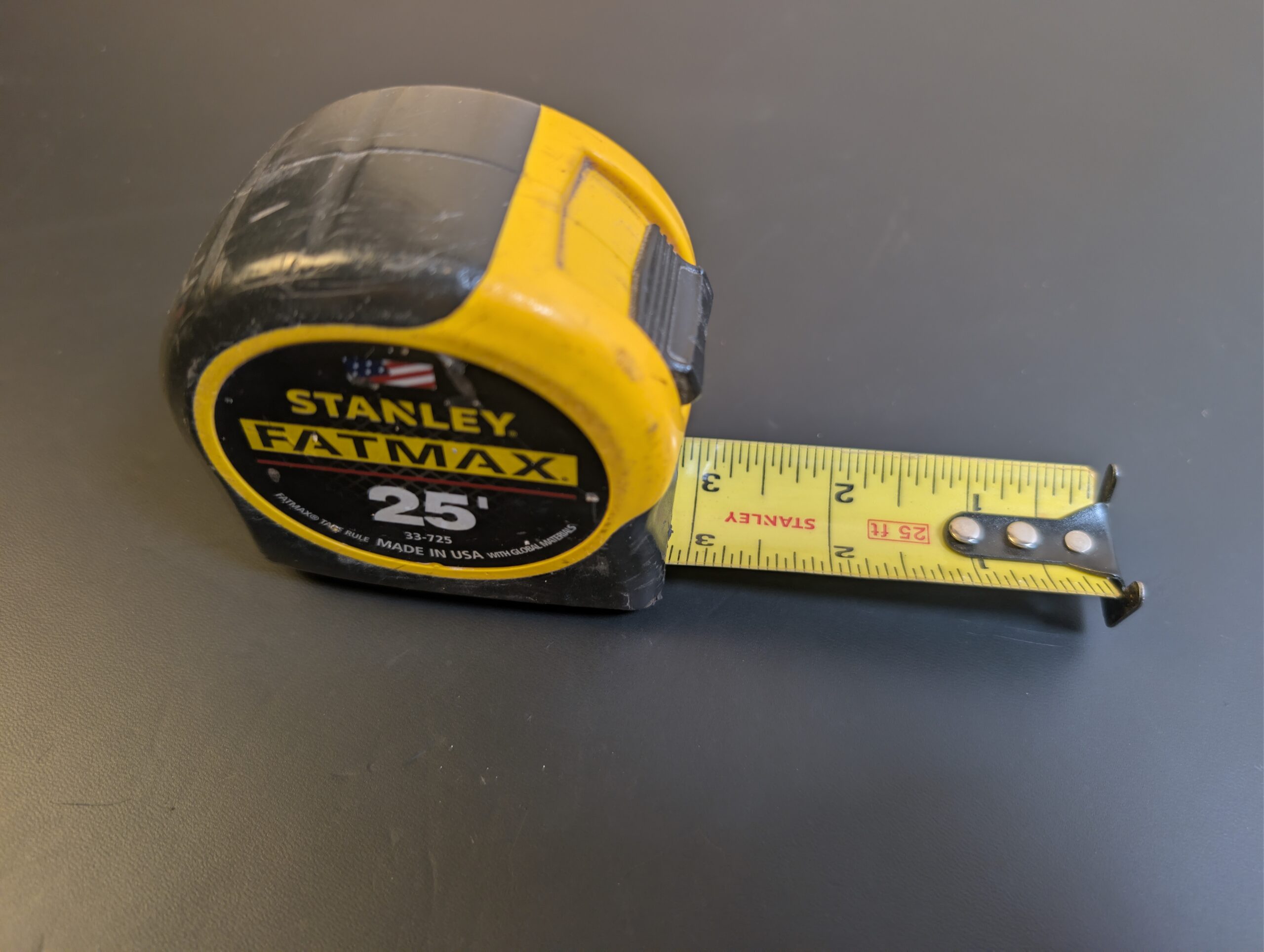
What separates a good tape from a toy:
- Standout and stiffness. If the blade folds when you push it out eight or ten feet, you will measure twice and still be wrong.
- A hook that doesn’t rattle. A loose end hook adds error on every inside and outside measurement. You feel it when you pull tension and the hook walks.
- Clear markings. High-contrast numbers, fractions you can read in a dim hallway. Fancy laser gadgets can wait. A honest 25-foot tape gets used every day.
- A case that survives drops. You will drop it. Off a ladder, off a bench, into gravel. Cheap plastic cases crack. Then the blade binds and kinks.
A kinked blade is a wasted measurement. Once that crease is in there, the tape never lays true again. Spend enough here that you are not fighting the tool before you even mark the cut.
Check current price — Stanley FatMax 25-ft tape
2. A Reliable Level
“Eyeballing it” is how pictures, shelves, and towel bars end up crooked for the next decade. The eye lies, especially when you are tired and standing on a chair.
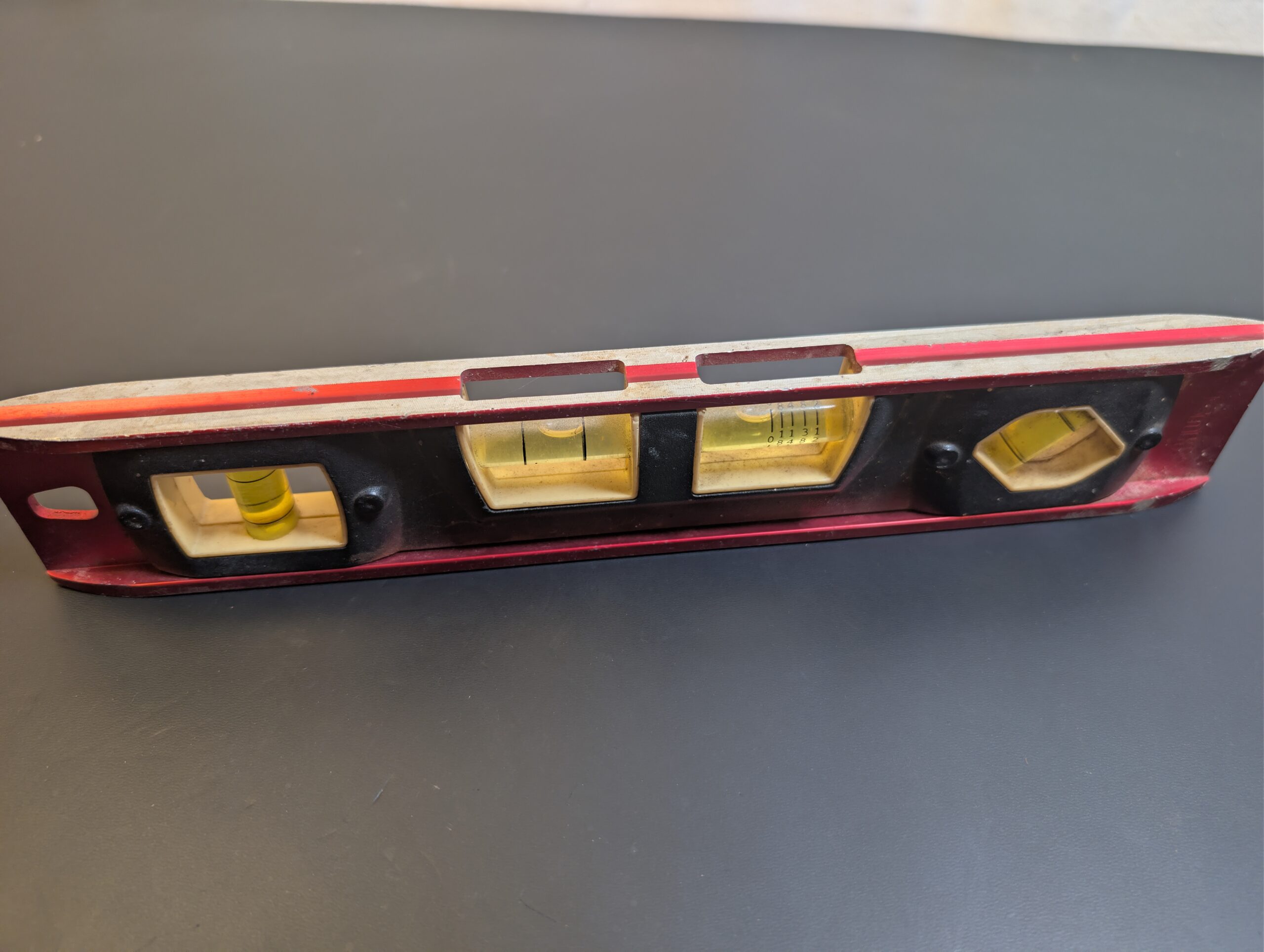
Start with two shapes, not ten:
- A solid 24-inch level for shelves, long runs, and anything that has to look right from across the room.
- A torpedo level for tight spots — under sinks, inside cabinets, on short pieces where a full-length level is comedy.
What to look for:
- Vials you can actually read (not fogged, not tiny).
- A body that doesn’t twist when you set it on an edge. If the frame is banana-shaped from the factory, every reading is a suggestion.
- Enough mass that it sits still while you mark. Featherweight novelty levels slide around and train you to “average” the bubble.
If the bubble lies, your project is crooked. Period. This is not the place to save three dollars.
Check current price — WORKPRO 12-inch magnetic torpedo level
The Fastening Phase: Hold It Together
This is where most house jobs live: holes, screws, and driving fasteners.
3. A Cordless Drill & Impact Driver Combo
This is your workhorse pair. Don’t settle for a single “drill that also impacts a little.” Get the combo.
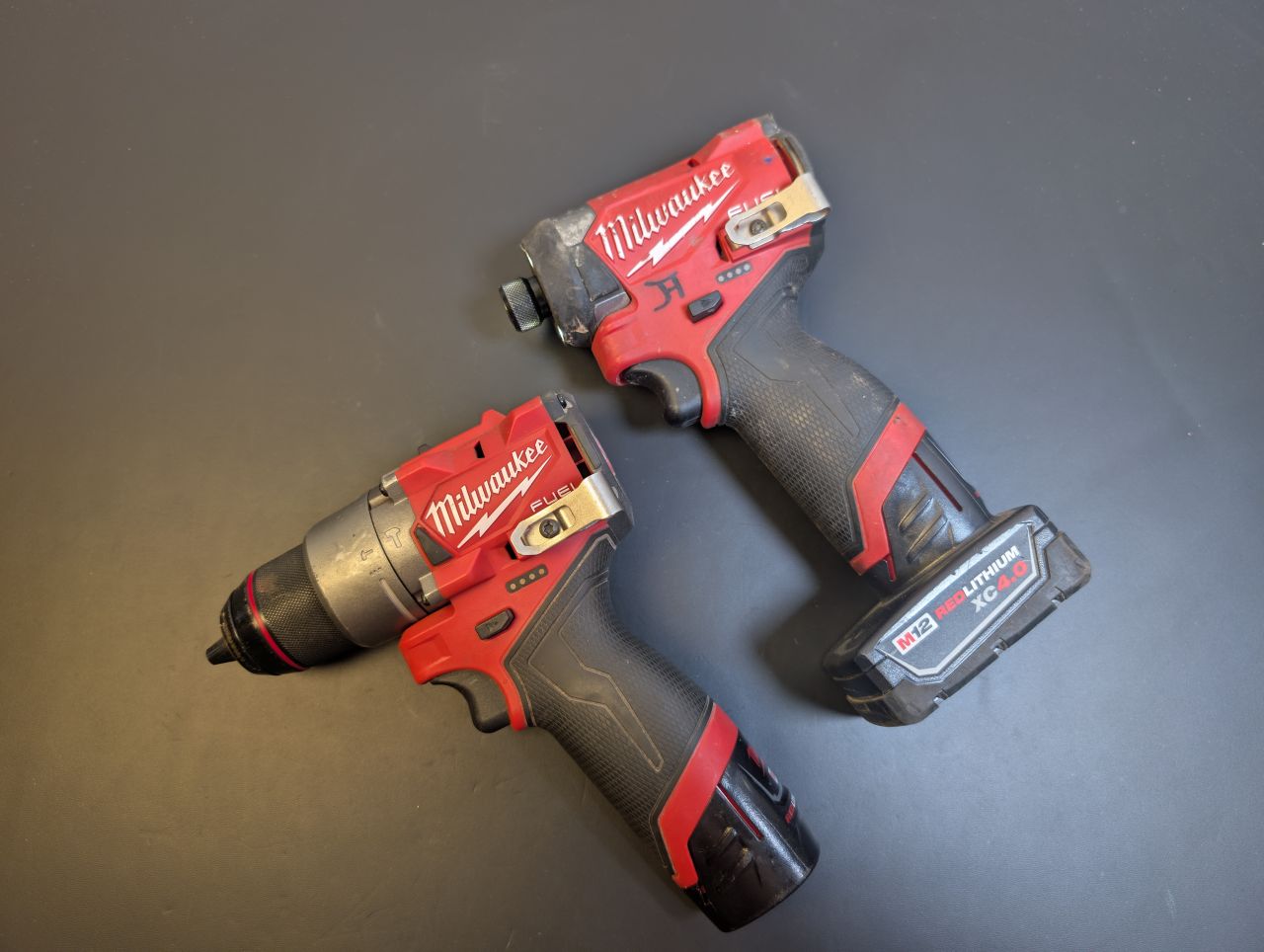
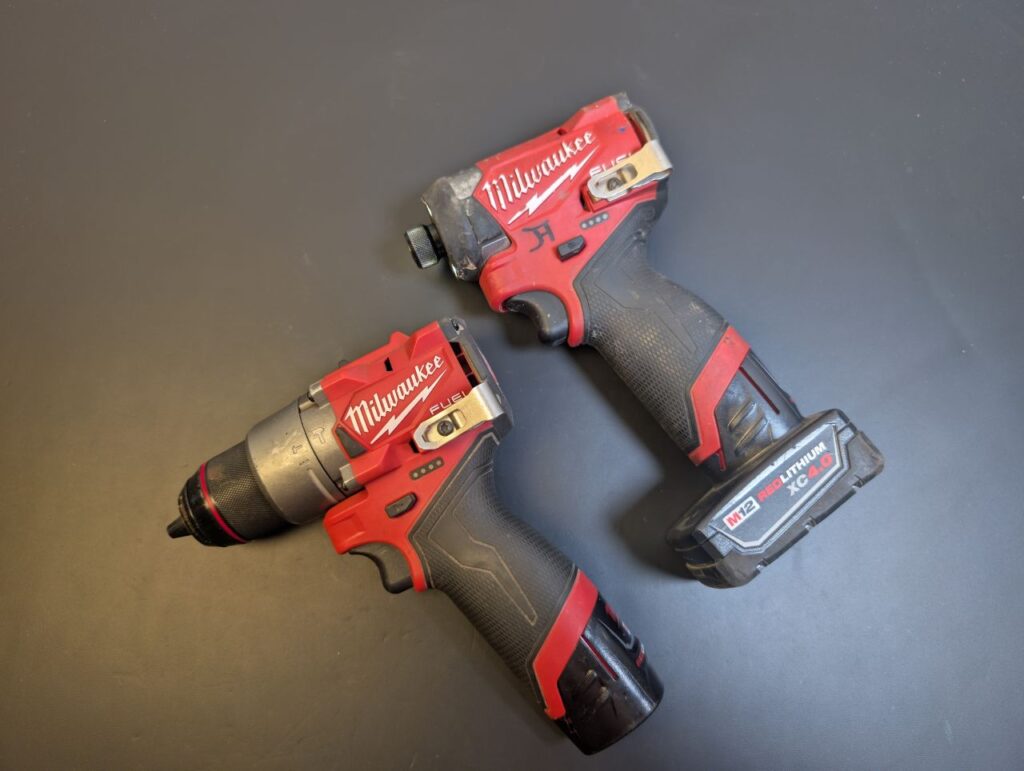
- The drill/driver handles holes, lighter screws, and anything that needs clutch control so you don’t cam out a hinge screw and strip the soft metal.
- The impact driver is for long structural screws, lag-style fasteners, and repetitive driving where a drill bogs down or twists your wrist off.
Why both matter on day one: hanging a TV, building a shelf, assembling furniture, putting up curtain rods. Half of that is “make a hole.” Half is “drive something long.” One tool doing both jobs poorly is how people burn out motors and ruin screw heads.
Buy them as a kit on one battery platform. Same batteries. Same charger. One system. Two packs if you can swing it — one on the tool, one on the charger — so the job doesn’t stop cold when the first pack dies mid-fastener.
This decision is the most important money choice in the whole First 10. Get the platform wrong and you pay a “wrong brand tax” every time you expand later. We break that trap down in the next article in this series. For now: pick a real ecosystem, buy the combo kit, and refuse random single tools in other colors just because they were on the endcap.
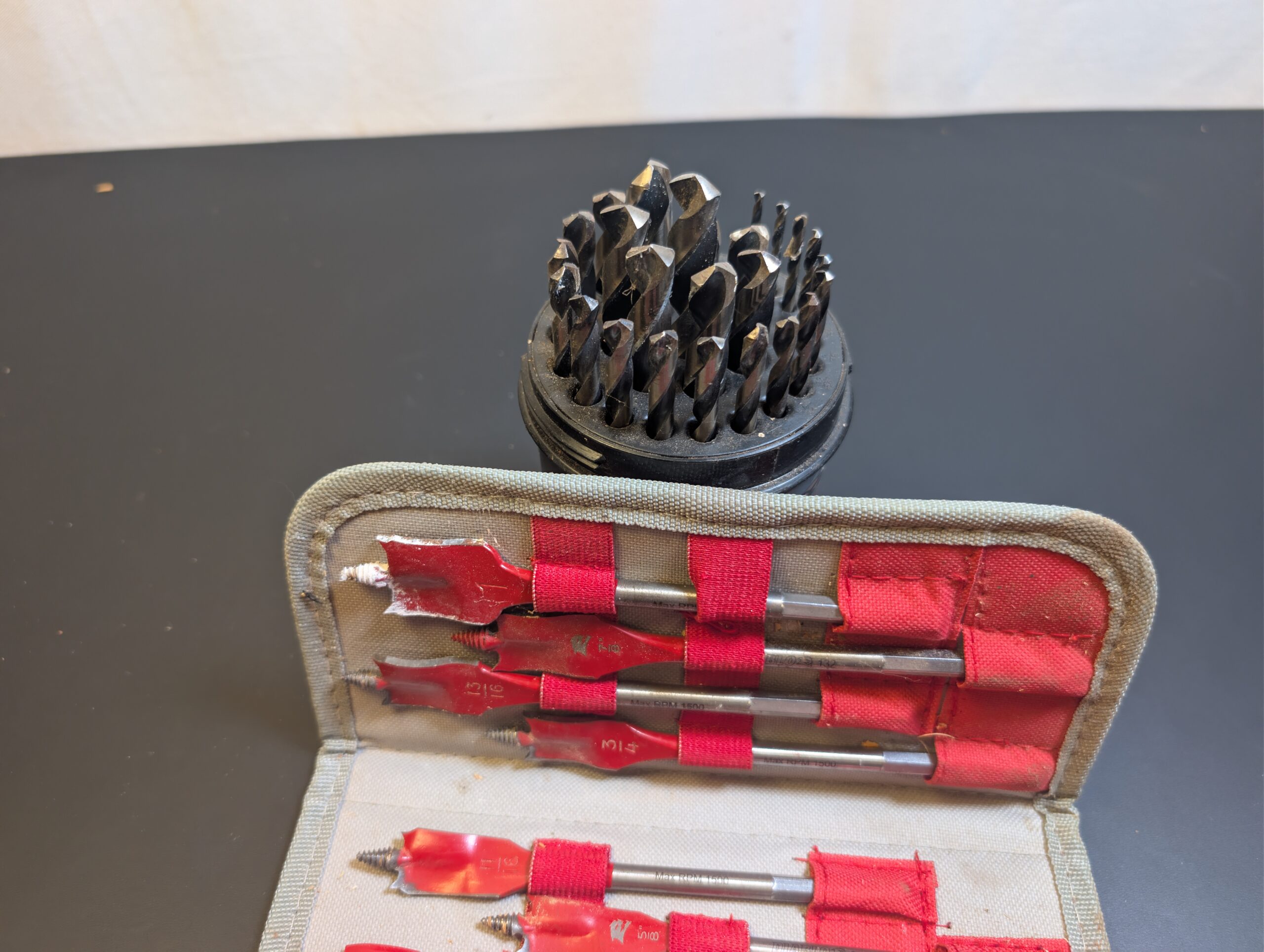
And buy bits with the kit. Twist bits for small holes and metal. Spade bits for wood. A cheap no-name 100-piece bit circus will round off the first time you lean on it. A small set of decent bits, replaced when they burn, beats a drawer of mystery steel.
If you only own one power-tool purchase for the house this year, make it this pair.
Check current price — Milwaukee M12 drill/impact combo
4. A Real Screwdriver Set
Batteries die. Soft-close hinges live in corners where an impact gun is pure overkill. Outlet covers, appliance panels, cabinet hardware — hand drivers still earn their keep every week.
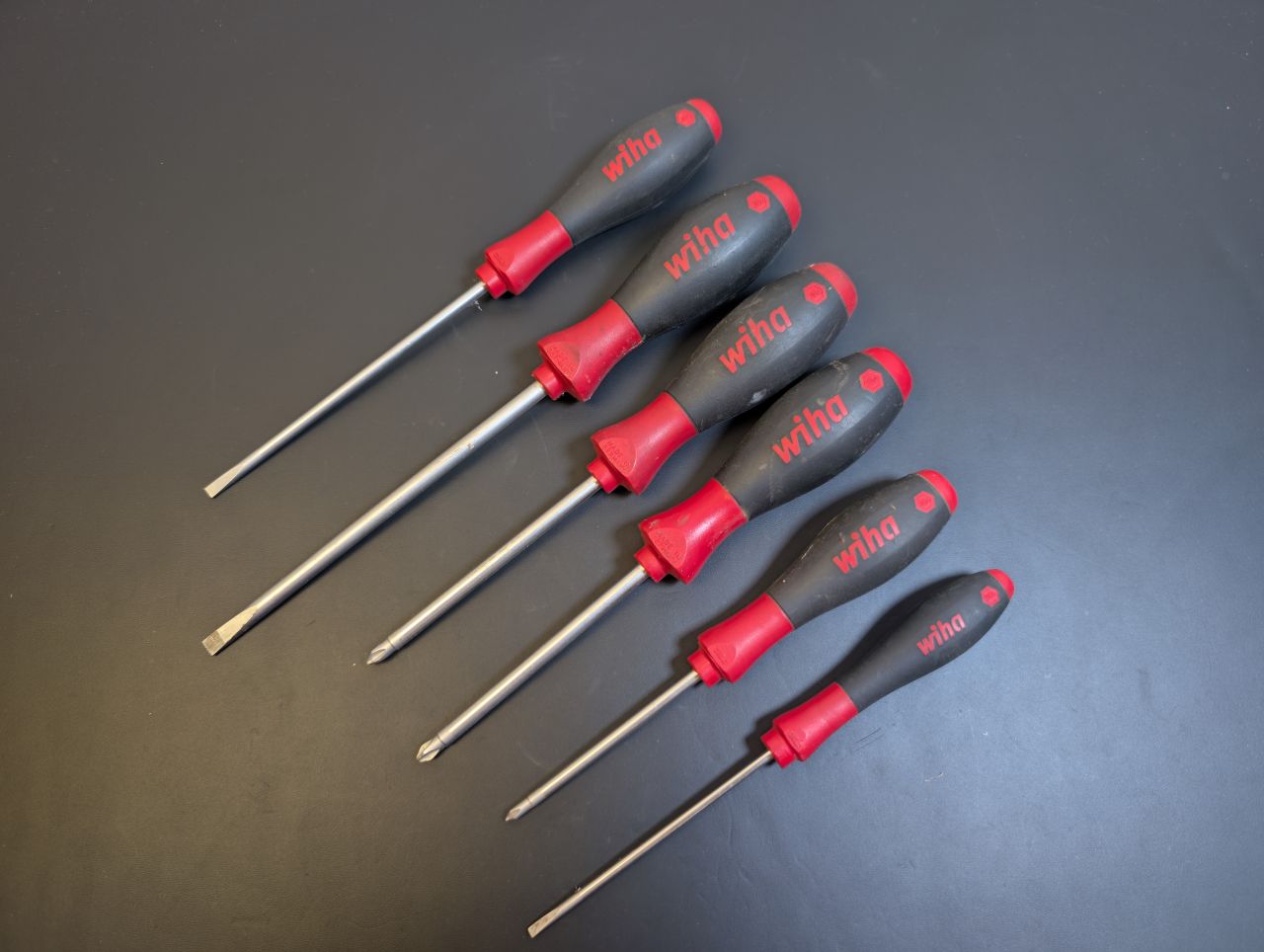
What “real” means here:
- Hardened tips that seat in the screw instead of camming out and chewing the head.
- Handles you can push on without the plastic crushing or spinning on the shaft.
- A small, useful mix: Phillips #1 and #2, a flat or two, and a Torx if your house hardware uses them. You do not need a 50-piece magnetized circus.
Avoid hollow-plastic “starter” sets that feel like toys the first time you lean on a stuck screw. A stripped screw head turns a five-minute fix into a twenty-minute extraction problem.
Keep one quality set in the house kit. Not six half-sets from Christmas stockings.
Check current price — Wiha 7-piece slotted/Phillips set
5. A Heavy-Duty Claw Hammer
Not a decorating hammer. Not an 8-oz craft mallet. You want a balanced 16-oz claw hammer that can drive nails, pull the occasional mistake, and not punish your wrist after a dozen swings.
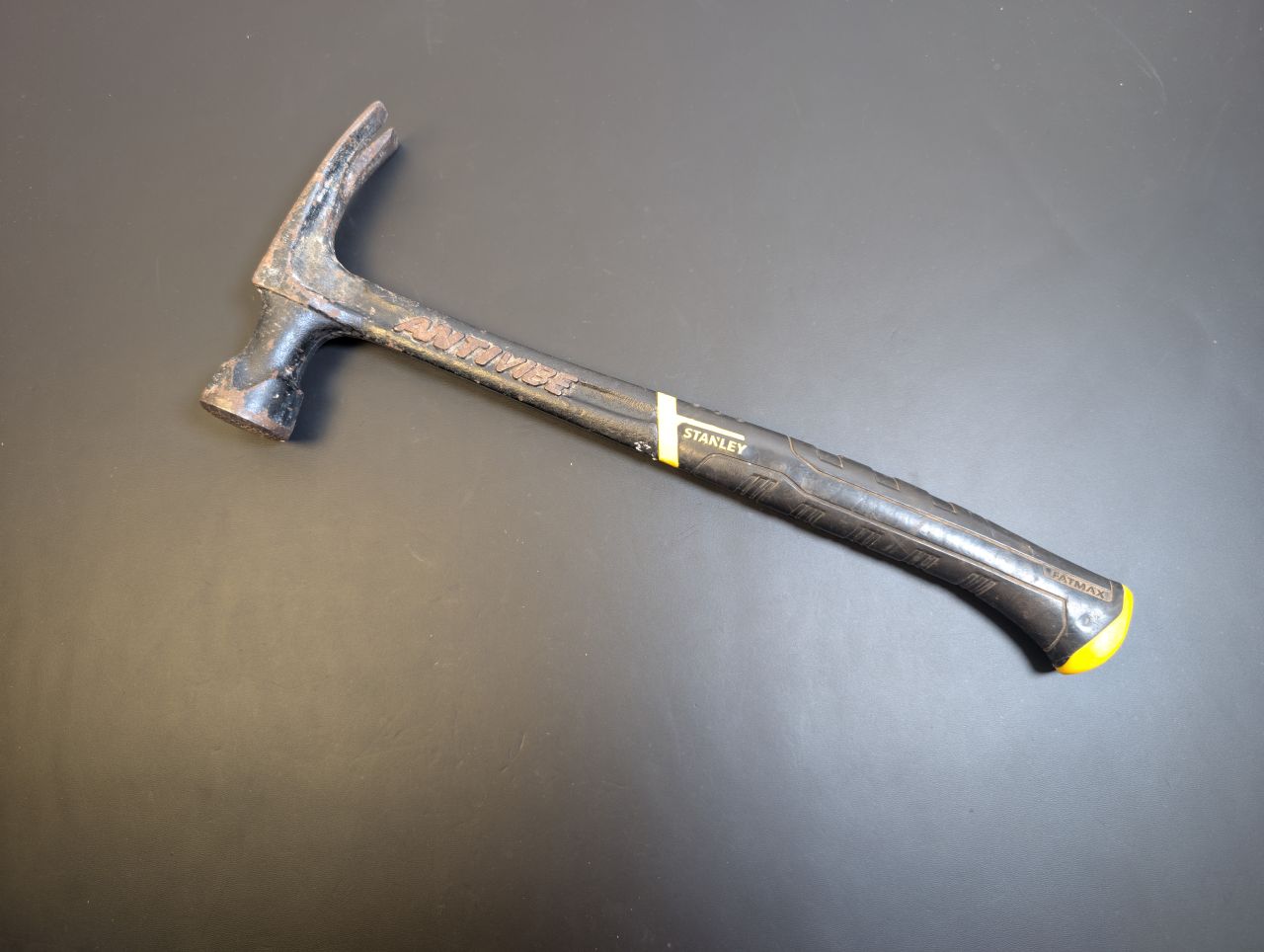
What to check in the aisle:
- Head feels tight on the handle (no rattle).
- Handle doesn’t flex like a diving board when you mock a swing.
- Claw that can actually get under a nail without snapping.
A cheap hammer teaches bad habits — glancing blows, bent nails, sore elbows. A decent 16-oz is a lifetime tool if you don’t throw it at concrete for fun. Framing hammers and specialty dead-blow mallets can wait until your projects demand them.
Check current price — Stanley FatMax 17-oz hammer
6. A Professional Utility Knife
You will use this more than you expect: shims, caulk tubes, packaging, carpet edges, scoring drywall, trimming plastic. A good utility knife is daily carry even when “nothing big” is happening. New house, endless boxes. That’s the job.
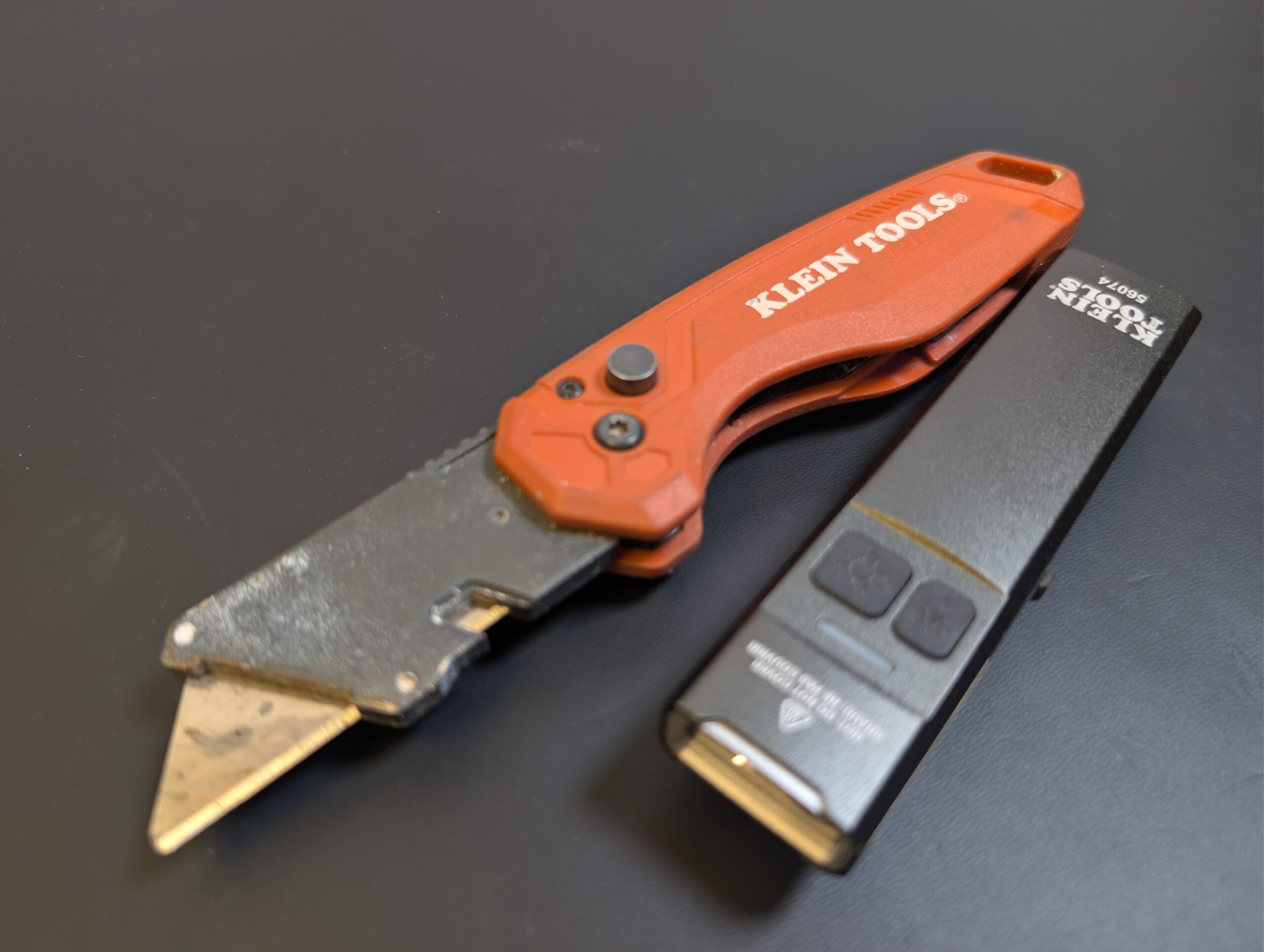
Look for:
- A lock that doesn’t collapse under side load when you bear down.
- A grip that stays put with sweaty or dusty hands.
- Easy blade changes, because a dull blade is a dangerous blade. People cut themselves when they push harder on a blade that should have been swapped two jobs ago.
A compact flashlight belongs in the same pocket of the kit. Breaker box, under the sink, behind the dryer. You don’t need a 1,000-lumen searchlight. You need something that turns on when the house is dark.
Snap-off blades are fine if the mechanism is solid. A folding pocket knife is not a substitute for a real utility knife on materials work. Change blades before they slip.
The Grabbing Phase: Get a Grip
Because some jobs are twist, pull, and hold — not drive a screw.
7. A Decent Pair of Pliers
Skip the bar-clamp rack for now. That is shop furniture. A new homeowner needs something that grabs a stuck supply nut, pulls a finish nail, twists a wire, or holds a bolt while you turn the other side.
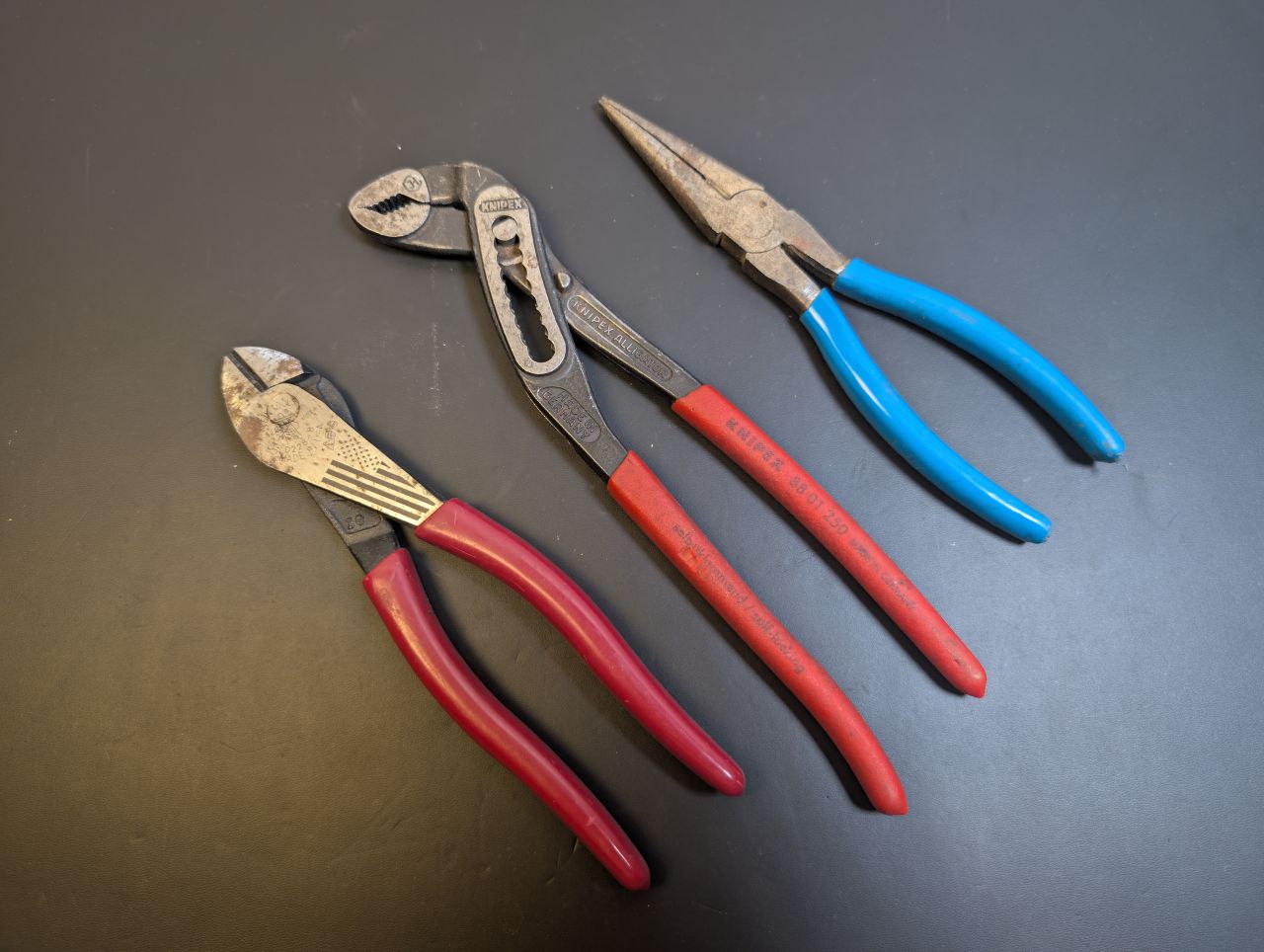
Day one, buy one pair that actually grips. Needle-nose covers a lot of house work. A solid slip-joint or linesman-style pair covers the rest. You do not need three premium pliers in the first week. You need one that doesn’t round off or spring open when you lean on it.
What to avoid: the 20-piece plier “kit” in rainbow handles. Those are toys. One honest pair beats a drawer of junk that slips off a fitting and skins your knuckles.
Clamps, vises, and specialty gripping tools can wait until you are gluing things up on purpose. Home repairs first.
If you want a starter trio that matches the photo:
The Shaping Phase: Controlled Cuts
Sometimes you need more control — or less noise — than a circular saw allows.
8. A Jigsaw (or a decent handsaw)
You do not need a full saw lineup on day one. You do need control.
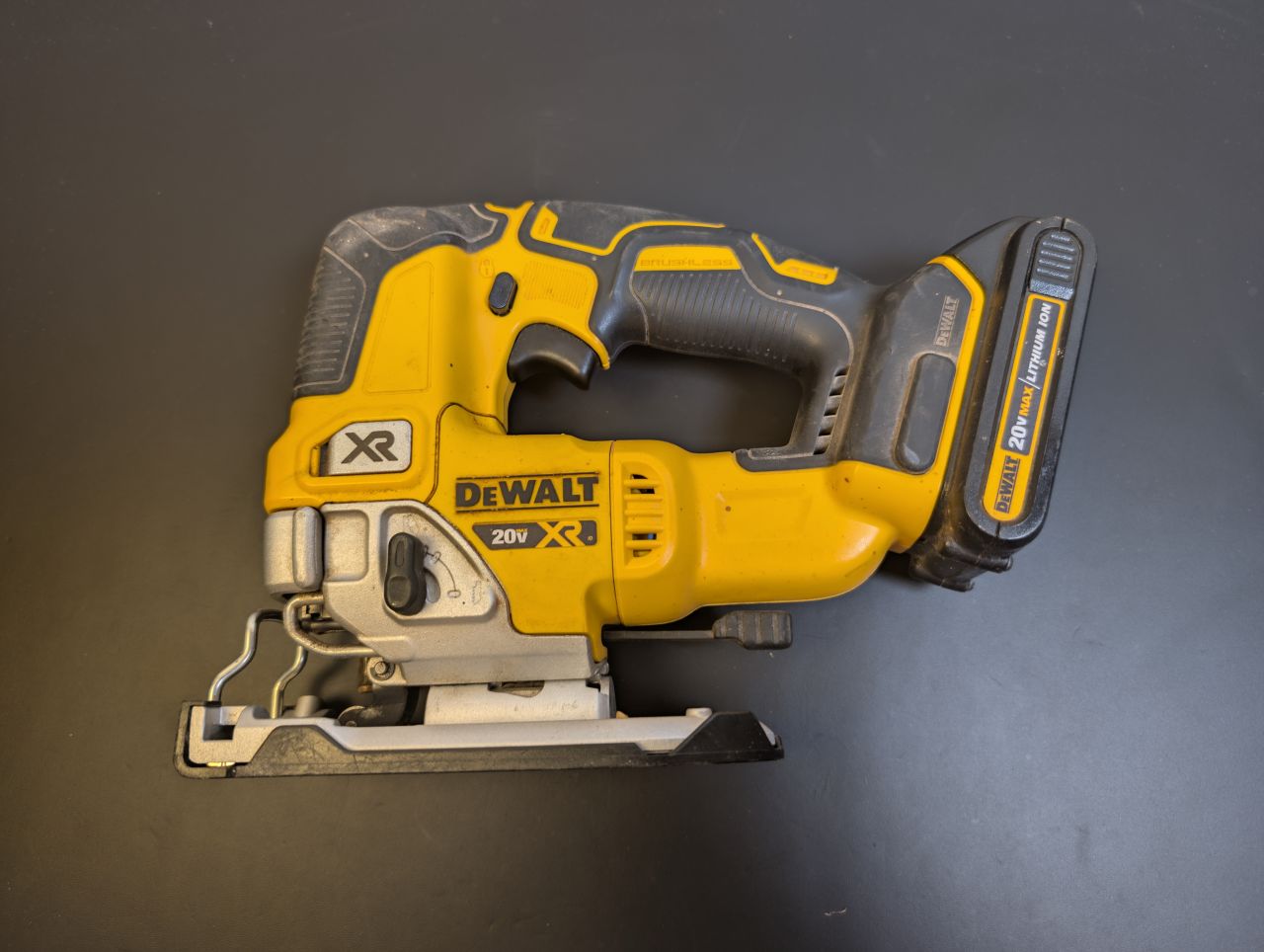
For most house work, a jigsaw on the same battery platform as your drill is the practical pick. Shelves, a curve in a piece of ply, a cutout in a cabinet. Quiet enough you are not starting a war with the neighbors. A fine-tooth handsaw still earns a spot if you want zero batteries involved — trim, a single board, a quiet indoor cut.
What to avoid: the cheapest multi-tool that vibrates your fillings out, and the no-name jigsaw that walks off the line. Mid-tier, same packs as the combo. Manual saws don’t care about platforms — buy steel that stays straight.
Circular saws, grinders, and oscillating tools can wait. Those are next-layer purchases once the foundation is actually getting used.
Check current price — DeWalt 20V MAX XR jigsaw
The Safety Phase: Protect Your Assets
Tools are replaceable. You are not.
9. High-Impact Eye Protection
Splinters, nail chips, wire ends, dust — none of them care about your deadline. Buy real safety glasses rated for impact, not gas-station readers with clear lenses.

If they fog every time you breathe, or dig into your temples, you will take them off “for a second.” That is when it happens.
Try them on. Keep a spare pair in the kit. Replace them when they are scratched to the point you can’t see detail — scratched lenses are how people miss the mark and then blame the tape measure.
Check current price — HexArmor safety glasses
10. Hearing Protection
Noise damage is cumulative. You will not feel it on the first afternoon with a saw or impact. You will feel it in ten years when conversations sound like they are underwater.
Keep foam plugs in a bag in the kit, or muffs on a hook by the bench. Habit beats heroics: if the tool screams, protection goes on before the first trigger pull.
Impacts, jigsaws, and anything that howls in a garage are loud enough to matter. Hearing is not a lifetime warranty item you can reorder from Amazon.
Pick the platform before the first drill
Pick your battery platform before you buy your first drill.
Not after the third impulse buy. Not when the drawer is already full of odd packs. Before the first trigger pull on a cordless tool.
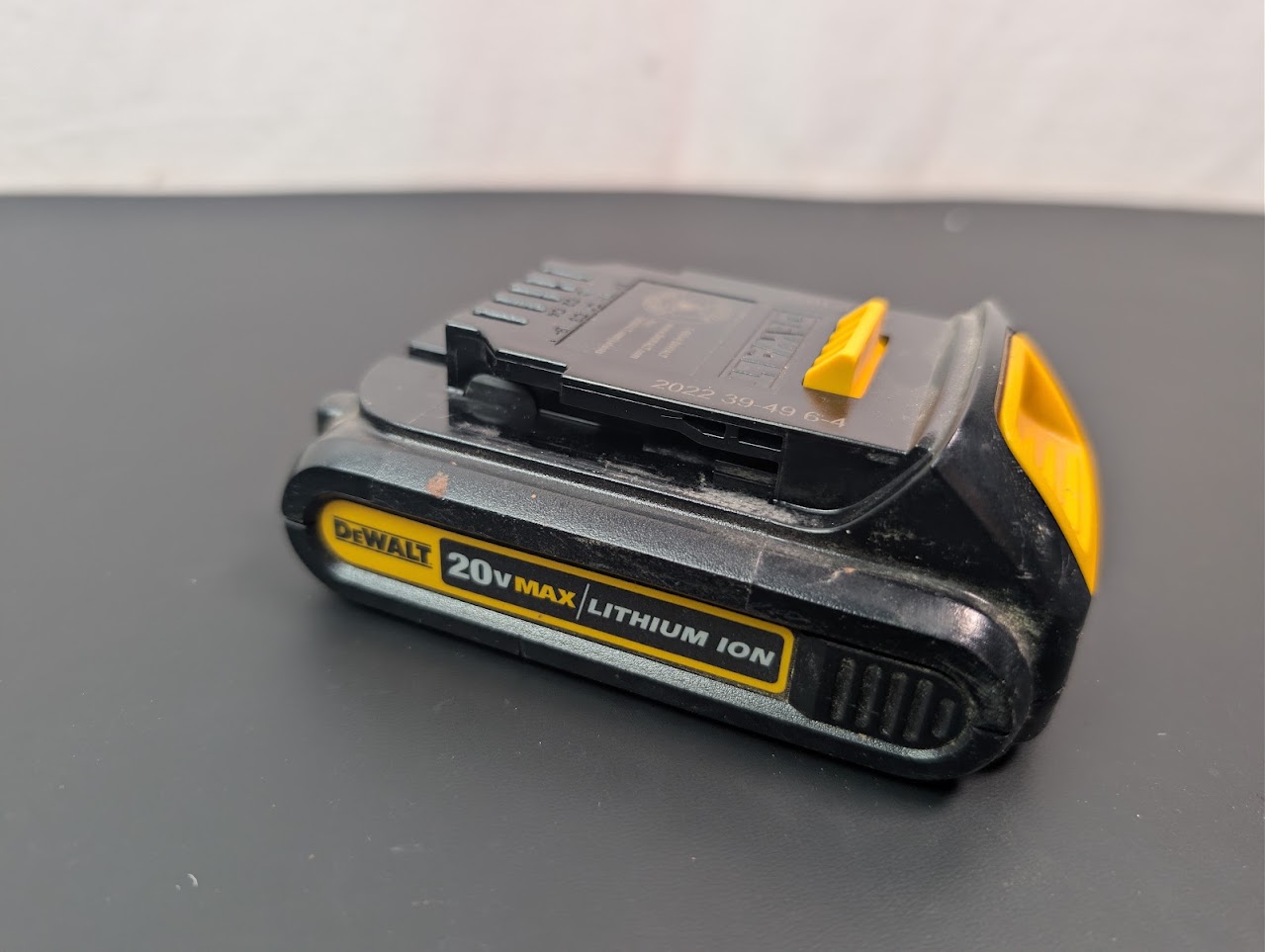
- Decide duty level. For this list, that is home / DIY / house repairs — not a paid crew truck.
- Pick a full ecosystem that fits that duty — DeWalt, Milwaukee, Makita, Ryobi, or another line with real catalog depth and packs you can still buy in five years.
- Buy a starter kit with two batteries and a charger (drill/impact combo is still the right first pair for most homes).
- Add bare tools only inside that system. Jigsaw next. Not a random grinder in a third color.
- Refuse endcap orphans unless you are deliberately buying a disposable beater.
If a friend tries to hand you a random bare tool in a brand you do not run, smile and decline — or budget the full pack-and-charger tax before you say yes. Free tools are not free when they invent a second ecosystem on your wall.
Deep dive on that decision: The Battery Platform Trap.
What you can skip (for now)
Permission to not buy everything the store waves at you:
- Bar clamps and vises before you are gluing anything on purpose
- Giant socket sets “for every car ever made” when you don’t work on cars
- A dozen specialty pliers before you own one pair that actually grips
- Angle grinders, miter-saw stations, and oscillating tools before you have made ten honest cuts with a jigsaw or handsaw
- No-name cordless “kit in a blow-mold case” with mystery batteries you cannot replace in two years
Buy depth later where your projects demand it. Foundation first. Pro and trade-specific gear is a different article.
The Buy List (Simple Order)
If you are standing in the aisle with limited cash, buy in this order:
- Tape and level — stop guessing
- Eye and ear protection — same day you buy anything that throws chips or noise
- Drill/impact combo on one platform, plus a small bit set — lock the system
- Screwdrivers, hammer, utility knife — daily manual workhorses
- One decent pair of pliers
- Jigsaw or handsaw — control cuts
That sequence keeps you from owning a fancy saw and no way to measure straight, or a drill with no eye pro.
Where to buy (if you want the same gear)
Same links as above, in one place. Skip this if you already clicked in the section. These are the pieces in the photos — not a shopping list you have to copy brand-for-brand.
- Stanley FatMax 25-ft tape
- WORKPRO 12-inch magnetic torpedo level
- Milwaukee M12 drill/impact combo
- 29-piece M35 cobalt drill bits
- Diablo 12-piece spade bits
- Wiha 7-piece slotted/Phillips set
- Stanley FatMax 17-oz hammer
- Klein Flickblade utility knife
- Klein 56074 EDC pocket flashlight
- Klein D248-8 diagonal cutters
- Knipex Alligator water pump pliers
- Klein needle-nose pliers
- DeWalt 20V MAX XR jigsaw
- HexArmor safety glasses
Final word
A real tool foundation is not about looking prepared for Instagram. It is about finishing the job without the tool becoming the problem.
Ten tools. Decent steel. One battery platform. Protection for the parts of you that do not come with a lifetime warranty.
Buy junk twice, or buy right once.
Next up: The Battery Platform Trap — why your first cordless purchase should be the system, not the random tool hanging on the hook.
What was the one tool you wish you had bought first instead of last? Drop it in the comments.